










Let's be honest: choosing a razor for your intimate areas isn't like choosing a razor for your beard. The stakes are... let's say, more delicate.
One bad blade in the wrong place, and you could be facing a difficult week.
In 2025 and 2026, the men's intimate razor market has exploded. Between "next-generation" manual razors, adapted electric razors, vintage safety razors making a comeback, and specialized trimmers... how do you know what will really work for you?
The problem? Most online guides recommend a specific model, saying "it's the best," without explaining that depending on your skin type, hair, and expectations, the "best" solution isn't the same for everyone.
This guide will break down ALL the types of razors (and alternatives) available in 2026. No marketing bullshit, just the real advantages and disadvantages of each method. By the end, you'll know exactly which solution suits your needs, your skin, and your level of experience.

Why a men's intimate razor is NOT like other razors
The specific characteristics of men's intimate areas
Before discussing the different types of razors, it's important to understand why your intimate areas require a specific tool. It's not marketing; it's basic physiology.
The skin of the scrotum is up to 10 times thinner than the skin on your face. It's extremely elastic, wrinkles in every direction, and is constantly moving. The testicles themselves move, while the skin relaxes and contracts depending on the temperature. In short, it's an area in constant motion.
On top of that, pubic hair is thicker and denser than beard hair. It grows in different directions, sometimes chaotically. And there are areas that are impossible to reach in a straight line: the perineum, between the buttocks, the base of the penis, the folds of the scrotum...
A razor designed for your face isn't necessarily suitable for your testicles. It's not snobbery; it's basic physiology. The skin, hair, angles, sensitivity... everything is different.
The real risks to consider
Let's talk frankly about the risks. Cutting your testicles isn't just unpleasant in the moment. It could potentially be the start of an infection, pain that lasts for several days, and above all, a fear that follows you every time you shave afterward.
If you're still wondering whether you really need to shave completely smooth, this article will help you understand what's at stake.
Cuts, even small ones, can bleed heavily in this area and are sometimes painful. They can take time to heal because of constant friction from clothing, movement, and perspiration. And every cut is a potential entry point for bacteria.
The skin is so sensitive that sometimes even pulling out a hair in this area can cause minor bleeding.
Razor irritation and burns are also very common. Thin skin reacts badly to the repeated passage of a blade, especially if it isn’t perfectly new and sharp. Ingrown hairs quickly become a nightmare: painful, unsightly, and sometimes infected.
Folliculitis, meaning an infection of the hair follicles, is another real risk. It starts with small red bumps and can develop into painful cysts. Not fun at all.
In 2025, 47% of men groom their intimate areas, but many still use unsuitable tools. The result: avoidable accidents, unnecessary stress, and an unpleasant experience that discourages them from taking care of themselves. (A bad memory of a cut in that area stays with you…)

The different types of intimate razors (the complete overview)
Before choosing a specific brand or model, you first need to understand the main types of razors. Each has its own logic, advantages, and limitations. Here’s the complete overview, no filter.
The manual multi-blade razor (Gillette-style)
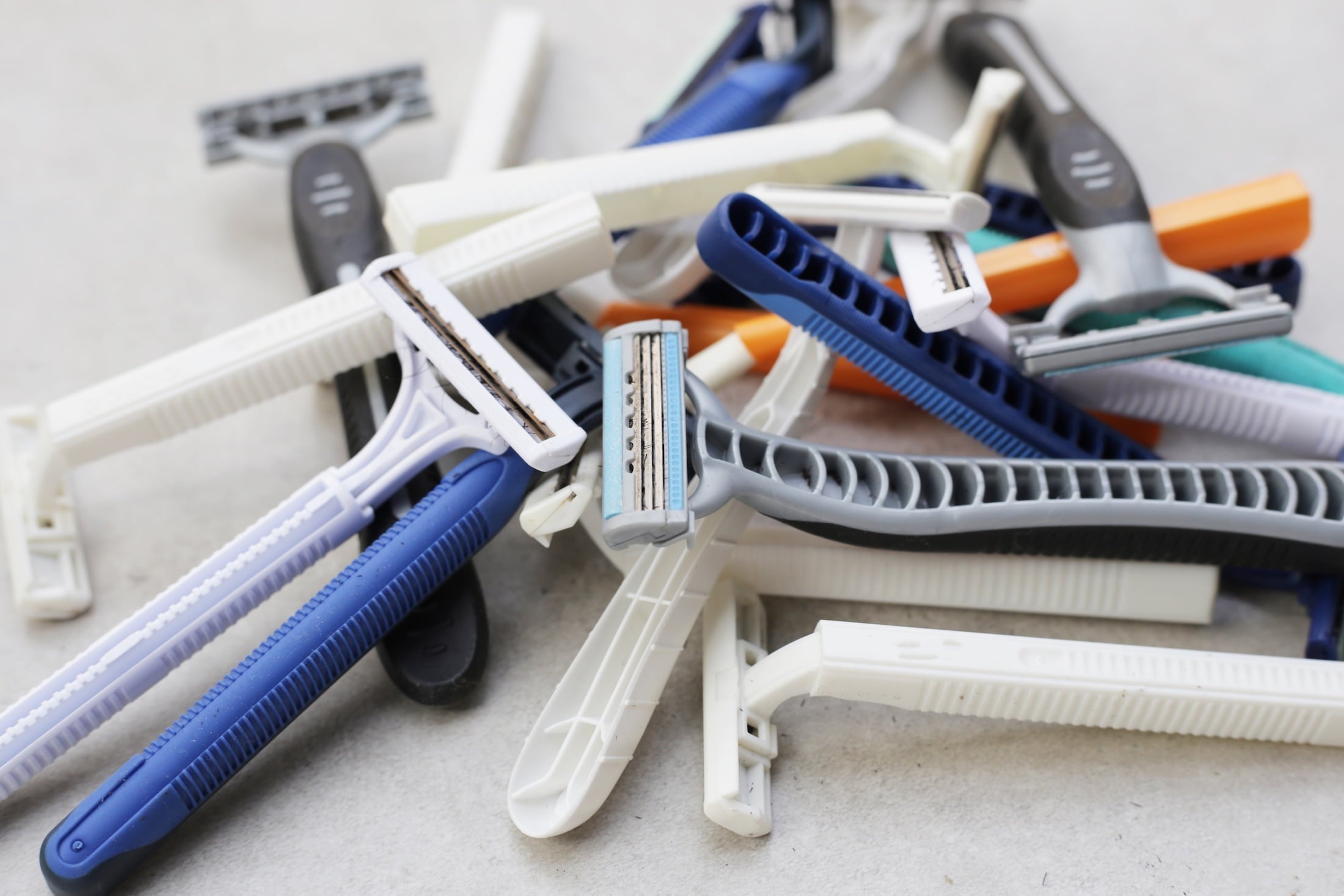
It’s the classic razor we all know. Three, four, sometimes five blades layered together, a pivoting head, and lubricating strips. The principle: several blades that cut hair close to the skin in a single pass.
It’s by far the most common, often because it’s what we already have at home for shaving the beard. We think, “Why buy something else? It should work.” Except…
The advantages, let’s be honest:
The result is an ultra-close shave, leaving the skin truly smooth. If that’s what you’re looking for, no other tool does better. You can find it everywhere: supermarkets, pharmacies, gas stations. The initial purchase price is affordable, between €5 and €15. No battery, no hassle. And you already know how to use it—it’s familiar.
The drawbacks (and they are significant):
The risk of cuts is HIGH on sensitive areas. The blades become dull quickly, especially on thick hair, which means an ongoing cost for replacement cartridges. You need shaving foam or gel, which can be irritating. It cannot be used on dry skin—you need all the preparation.
Ingrown hairs are very common with a close shave. On areas with folds, such as the scrotum or perineum, it is really complicated. And the angle of attack is critical: a small mistake of a few degrees, and you get a cut.
Who is it really for?
Those who want an ULTRA-smooth result and do not have particularly sensitive skin. Those who already have experience with a manual razor and have mastered the technique. And those with a tight short-term budget (even though, over time, the blades are expensive).
Using a manual razor on intimate areas is a bit like driving a sports car without ABS. It can be extremely effective... but it forgives no mistakes. And honestly, on your testicles, do you really want to take that risk?
If you absolutely want to use a manual razor, take a look at our razor vs. trimmer comparison to understand the real differences.

The safety razor (the vintage comeback)
The safety razor is the metal razor our grandfathers used. A single ultra-sharp blade protected by a metal guard. 1950s style, often made of chrome or brass, with a substantial weight in the hand.
Since 2020, it has been making a strong comeback. The zero-waste movement, opposition to plastic, the return to “real” things... the safety razor checks many boxes. But is it suitable for intimate areas?
The advantages on paper:
It is extremely eco-friendly. The blades are made of recyclable stainless steel, with no plastic. Economical in the long term: the blades cost between €0.10 and €0.30 each. The razor itself lasts for decades; you can even pass it on to your children.
The shave is close; a single quality blade cuts better than five average blades. Fewer ingrown hairs than with a multi-blade razor. And the vintage look makes an impression—it is a beautiful object.
The drawbacks (major for intimate areas):
The learning curve is STEEP. Allow at least 3 to 4 weeks to master the technique. The risk of cuts is VERY HIGH throughout the learning process. The angle must be ultra-precise (exactly 30°); otherwise, you either cut yourself or it does not cut (not to mention the potentially invisible skin being torn along the way—yes, I am speaking from experience, and you definitely feel it in the following days...).
On areas with folds or movable skin, it is practically impossible to use safely. For beginners trimming intimate areas, it is clearly unsuitable. It requires quality shaving foam, time, and maximum concentration.
And let’s be clear: on the testicles, it’s DANGEROUS. Really. The skin moves and wrinkles, and a blade that sharp leaves no room for error.
Who is it really for?
Traditional-shaving purists who enjoy the ritual. Highly experienced users of this type of razor who use it daily on their face. For flat areas only, such as the pubic area—not the testicles. And people who have the patience and time available.
A safety razor on the pubic area, why not if you already know how to use one. On the testicles? It’s literally playing Russian roulette with your intimate parts. We can’t recommend it. Yes, it’s eco-friendly. Yes, it’s economical. No, it’s not made for your balls. Sorry, purists.
If you still want to try it, read our guide to shaving your testicles with a blade razor first. It could save your life. Or, more precisely, your balls.
To better understand all the hair-removal methods available in 2025, check out our complete guide.
The rotary or foil electric razor
The classic electric razor, the kind many people already have for their beard. Philips-style rotary heads or Braun-style vibrating foils. Rechargeable, fast, convenient. But is it suitable for intimate areas?
The real advantages:
It’s relatively safe. The foil or cap protects the skin from direct contact with the blades. No need for shaving foam or gel—you can use it dry. It’s quick once you get the hang of it.
Rechargeable, so you don’t have to replace blades often. Some models can be used on dry or wet skin, or even in the shower. And they’re versatile: beard, body, and potentially intimate areas.
The (major) drawbacks:
These razors are NOT designed specifically for ultra-sensitive areas. They can heat up with prolonged use, which is extremely uncomfortable on the testicles. The foils can catch the thin skin of the scrotum, especially when it’s loose.
The shave isn’t as close as with a manual razor. It’s fairly noisy and not very discreet. On contoured areas like the testicles or perineum, it’s genuinely difficult. Rotary heads can pull very thick hair instead of cutting it. Regular maintenance is also necessary to keep it working effectively.
And above all, they’re not suitable for long hair; the hair needs to be short already for this kind of razor to be able to “grab” it.
Who is it really for?
Those who already have a good electric beard trimmer and want to use it on the body and pubic area too. Medium to high budget (€60–150 depending on the model). For those who want a quick shave without foam.
But be careful around the testicles. It may work if you’re extremely careful, but it’s pushing it.
An electric facial razor on the pubic area can work. On the testicles? It’s risky. These razors aren’t optimized for the delicate, mobile skin there. You can try, but with great caution.
Electric razor manufacturers say they’re “usable all over the body.” Technically, yes, but the engineers who designed them weren’t specifically thinking about testicles first. That makes all the difference in terms of safety and ergonomics.
Multi-blade “specially designed for sensitive areas” razors
For the past few years, brands have been offering manual razors sold specifically for intimate areas. Packaging that openly acknowledges their use, targeted messaging, and sometimes a few technical adjustments.
The advertised benefits:
Theoretically designed for sensitive areas. The heads are often smaller for greater precision. Added anti-cut protection systems (wider lubricating strips, protective caps). The packaging openly acknowledges intimate use, so there’s no need to hide it. Tailored instructions are included.
The drawbacks (the reality):
They’re still manual multi-blade razors. The risk of cuts is always there. The marketing is sometimes more impressive than the actual technical innovation. Prices are often high for what they are (€15–30). The blades still need to be replaced regularly, creating an ongoing cost.
Ingrown hairs are still possible with a close shave. Effectiveness varies widely by brand, with some genuinely better than others.
Who is it really for?
Those who absolutely want a manual razor but are looking for a “safer” option. Willing to pay a little more for peace of mind. Relatively resilient skin. Already experienced with shaving.
It’s definitely better than a basic Gillette. But “specially designed for sensitive areas” doesn’t mean “zero risk.” It’s still a multi-blade razor, with all the advantages and drawbacks that come with it. Marketing tells you it’s “safe”; reality tells you it’s “safer than a basic razor, but still a razor.”
The challenger: the intimate trimmer (the real alternative)
What if, in the end, the best intimate “shaver” for men... wasn’t a shaver at all? In 2026, more and more guys are asking themselves that question. And the answer is becoming clear: the intimate trimmer really changes the game.
What exactly is an intimate trimmer?
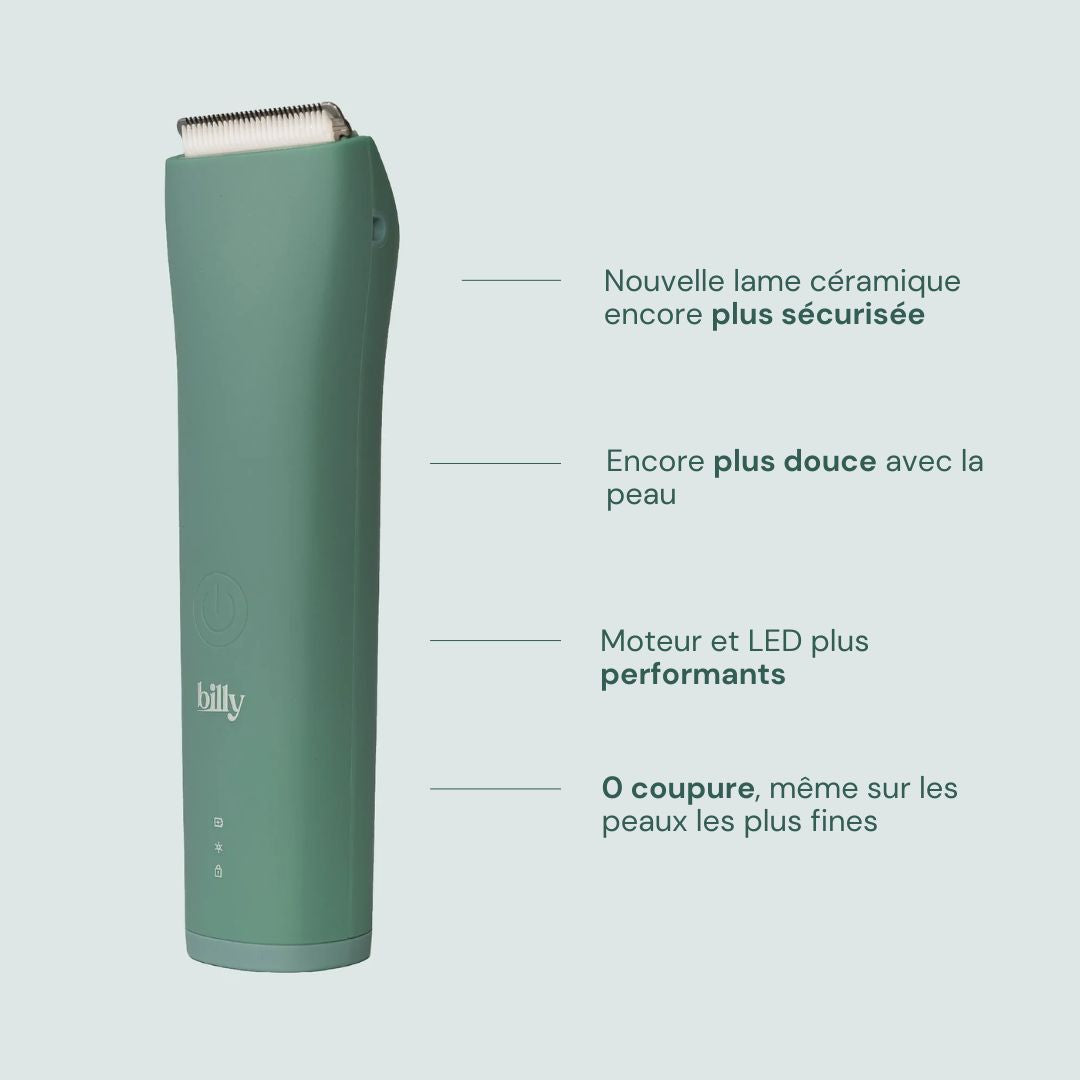
An intimate trimmer for men is a cutting tool designed SPECIFICALLY for sensitive areas. Not a rebranded electric razor, not a beard trimmer in disguise. A real tool designed from scratch for your intimate areas.
The fundamental difference from a razor: it doesn’t cut flush with the skin. It leaves approximately 0.5 mm of hair. It’s imperceptible visually and to the touch, but this tiny distance makes all the difference in terms of safety.
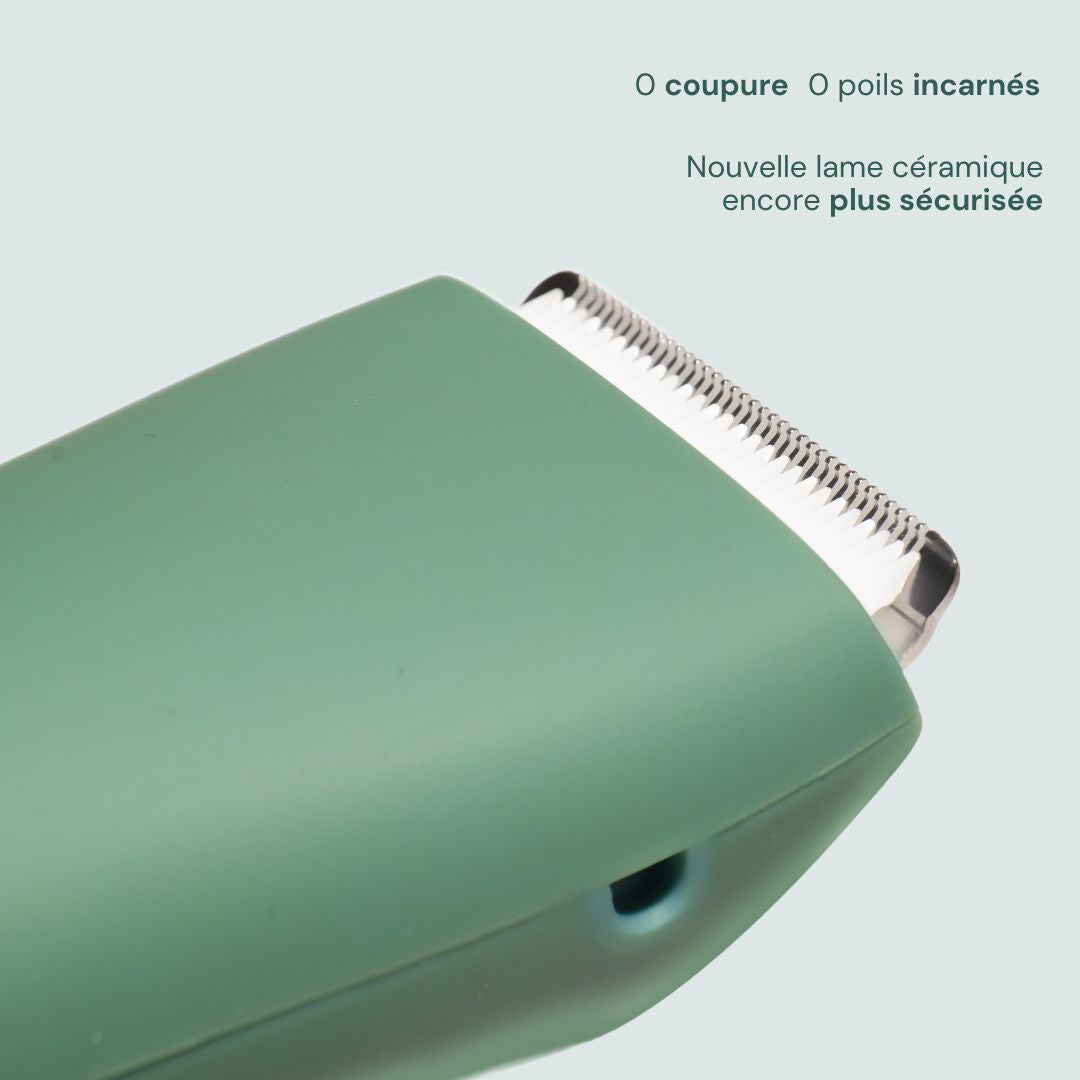
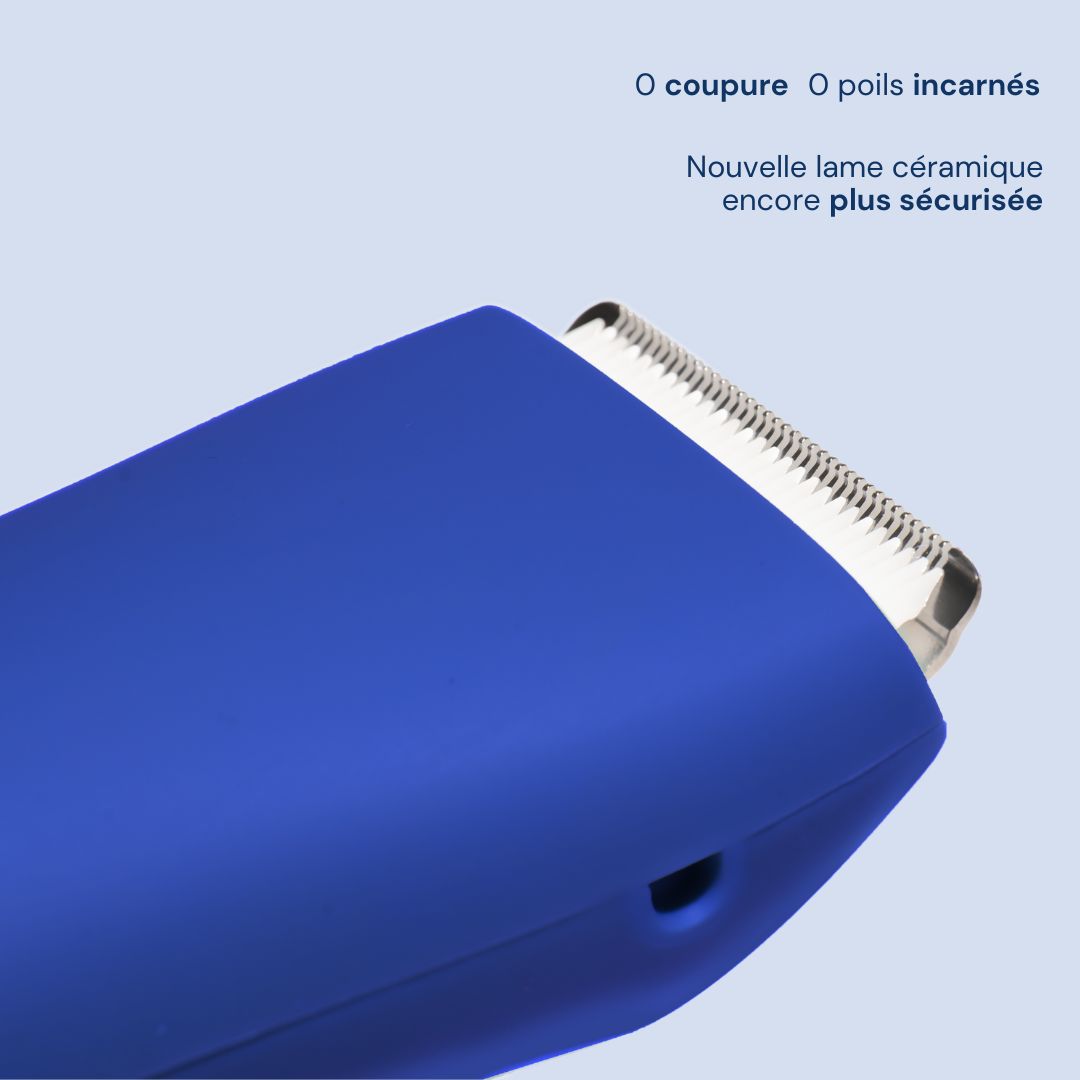
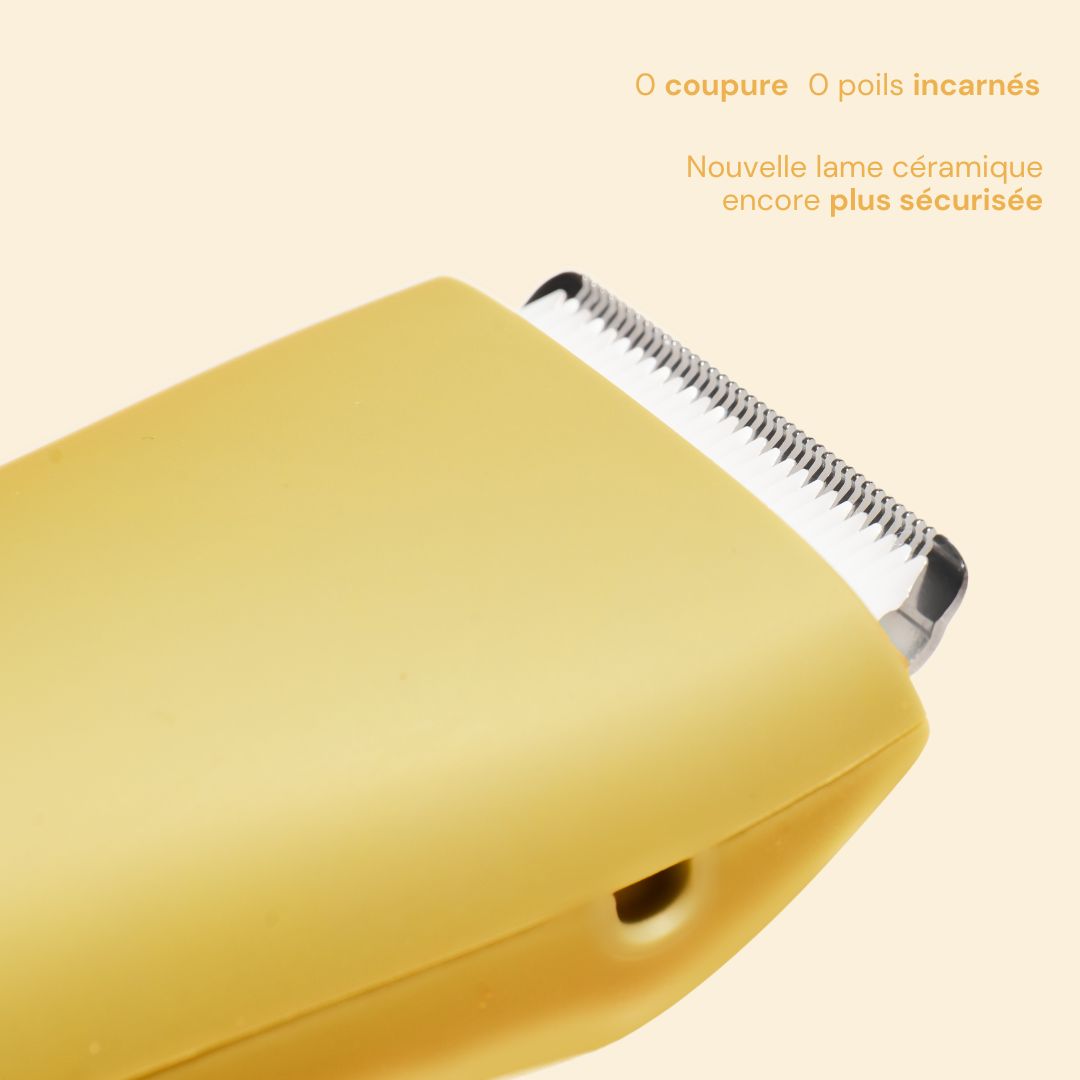
The difference from a beard trimmer: the blade is specifically designed never to touch the skin. The spacing, motor power, ergonomics—everything is adapted to sensitive areas. The technology used (ceramic or medical-grade stainless steel blade) prevents the skin from passing between the blade’s teeth.
Technically, the blade never touches the skin directly. The spacing between the teeth is calibrated so that even the thinnest skin cannot pass through. The motor cuts the hair above the skin’s surface, without pulling. Just a clean, precise, safe cut.
An intimate trimmer isn’t a beard trimmer in disguise. It’s a tool designed from scratch for your sensitive areas. An important distinction.
The benefits of a trimmer over razors
Let’s talk about the real benefits—the ones that truly make a difference every day.
Maximum safety
The risk of cuts is close to zero with a good trimmer. No direct contact between the blade and the skin. Can even be used on mobile skin, such as the testicles, without stress. Forgiving of beginner mistakes. Less mental stress = better results and a calm, focused experience.
Versatile use
Works on dry or wet skin, depending on your mood. Use it in the shower if it’s waterproof (and it should be). No need for foam, gel, or other products. Quick: 2 to 5 minutes max to do everything. All areas without changing tools, from the pubic area to the perineum.
Ingrown hair management
Cuts slightly above the skin = dramatically fewer ingrown hairs. No irritation from shaving close to the skin. Ideal for sensitive skin or skin prone to problems. As explained in our article on ingrown hairs, the trimmer is THE solution to this problem.
Cost-effective in the long run
A higher initial investment, that’s true (€60–€80 for a good one). But the blades last 3 to 6 months depending on use. No shaving foam or gel to buy every month. Rechargeable battery, no disposable batteries to throw away. Over 1–2 years, it more than pays for itself.
Ease of use
No complex technique to master like with a safety razor. No need for an extremely precise angle. Consistent results from the very first use. Less mental stress—you can even use it automatically in the shower.
If you want to understand all the available options, check our 2025 intimate trimmer guide.
The “drawbacks” of a trimmer (let’s be honest)
Because we’re honest here, let’s also talk about what could be perceived as drawbacks.
The result isn’t 100% clean-shaven
The trimmer leaves about 0.5 mm of hair. If you want skin that’s 100% smooth like after using a manual razor, the trimmer isn’t suitable. But that precise half-millimeter is what helps prevent cuts and ingrown hairs. It’s a choice, not a bug. (You can also run a manual razor over your 0.5 mm of stubble afterward—it’ll be easier, quicker, and more comfortable than shaving from a longer length.)
Higher initial investment
A good intimate trimmer costs between €60 and €120, compared with €10 for a basic manual razor. But the calculation changes over time: no blades to buy every week, no €5 shaving foam each month. It pays for itself within 4 to 6 months. Over 2 years, you save money.
Requires a battery/electricity
Not practical if you systematically forget to charge it. But good trimmers have long-lasting batteries (several weeks of battery life). And honestly, we all charge our phones every day, so charging a trimmer once a month is manageable.
Less “traditional”
Some guys really want a razor for the traditional, masculine, ritual aspect. That’s a completely valid personal preference. But in 2026, we can also rethink what “masculinity” means and accept that the safest tool isn’t necessarily the most “traditional.”
The “drawbacks” of a trimmer are mainly a matter of personal preference. If you REALLY want an ultra-close shave, then yes, that’s a limitation. But for 95% of guys who simply want to stay well-groomed without the risk, the trimmer checks all the boxes.
We're not saying the trimmer is perfect for everyone. We're just saying that for most guys, it's the safest, fastest, and least hassle-prone solution. Period.
How to choose a good intimate trimmer
If you're convinced by the trimmer (spoiler: you should be), here are the criteria that really matter so you don't make a mistake with your purchase.
1. The anti-cut blade (the absolute number-one criterion)
This is THE criterion that leaves no room for error. Ceramic is superior to stainless steel for sensitive skin. The gaps between the teeth should be narrow. No aggressive angles on the blade; everything should be rounded. If you can run it over your forearm without it snagging, that's a good sign.
2. 100% waterproof (non-negotiable)
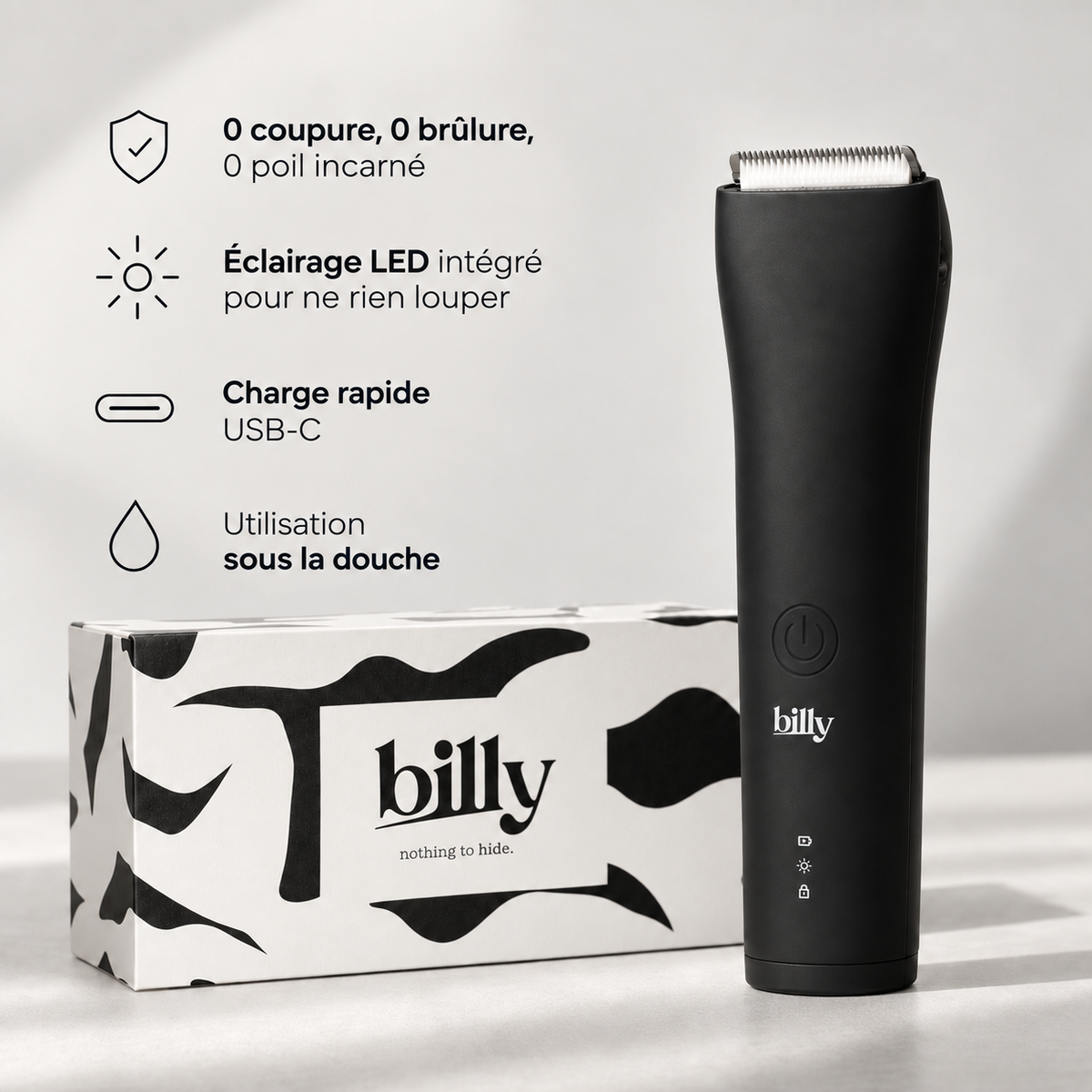
Usable in the shower, not just "splash-resistant." Extremely easy to clean under running water. Why is this important? Because the shower is the most comfortable and convenient place to groom. The hair rinses away directly with the water, and your skin is relaxed (and so are you, normally). With the small LED, it also helps quite a bit...
3. The integrated LED light (the detail that changes everything)
Perfect visibility of the areas in the shadows. Increased safety, so you can see exactly where you're trimming. No "blind spots" means no unpleasant surprises. As we explain in our dedicated article, it's really not a gimmick.
4. Ergonomics specifically designed for intimate areas
The right size, neither too large nor too small. A secure grip that doesn't slip, even when wet. Balanced weight for precision. A head angle designed to reach difficult areas (the perineum, between the buttocks).
5. Multiple cutting lengths
Ideally, from 0mm (close shave) to 12mm (long). Guards that truly stay in place during use. Flexibility depending on the area: maybe 0mm on the pubic area, 3mm on the testicles, depending on your preferences.
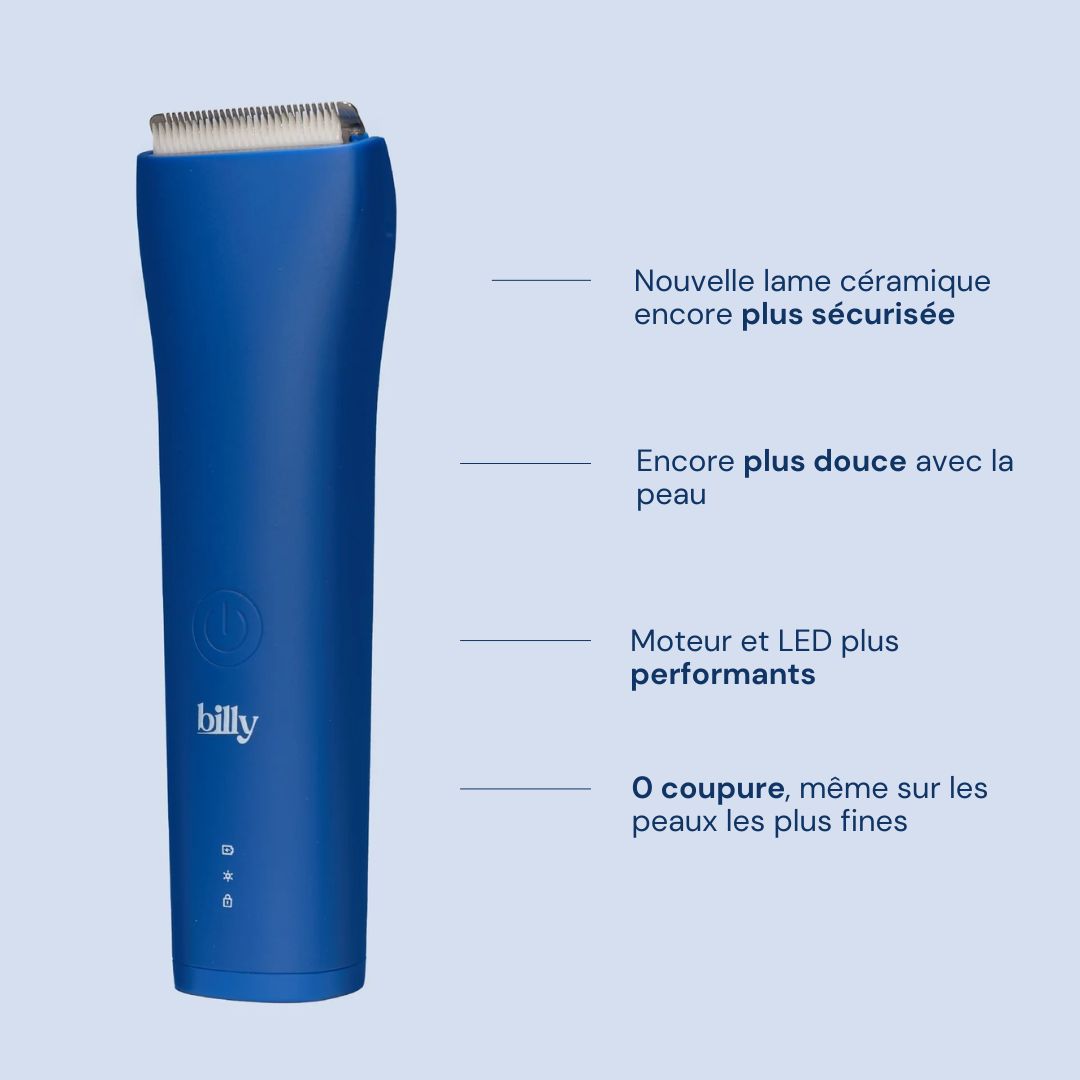
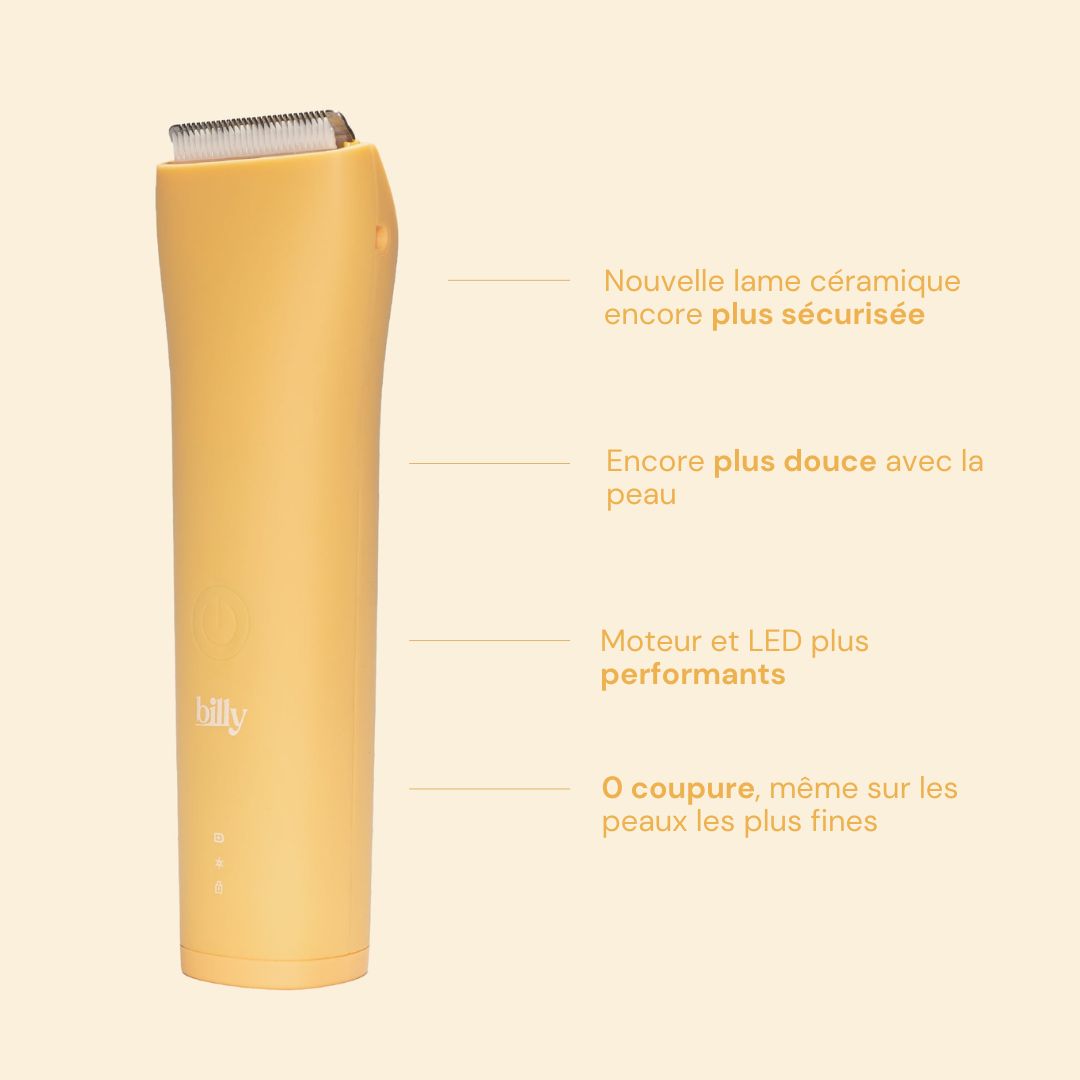
The Billy meets these 5 criteria: a ceramic anti-cut blade, IPX7-certified waterproofing, an integrated LED, an ergonomic design specifically made for intimate areas, and 5 cutting lengths (0, 3, 6, 9, 12mm). We designed it exactly for this, listening to the real struggles guys face (and our own, haha).
Complete comparison table: razors vs. trimmers
To make things clearer, here’s an honest comparison of all types of tools. No marketing bullshit, just the facts.
| Criteria | Multi-blade manual razor | Safety razor | Standard electric shaver | Intimate trimmer |
|---|---|---|---|---|
| Testicle safety | ⚠️ Risky | ❌ Dangerous | ⚠️ Limited | ✅ Safe |
| Shaving result | ✅ 100% smooth | ✅ 100% smooth | ⚠️ Average | ⚠️ 0.5 mm remains |
| Speed | ⚠️ 10–15 min | ❌ 15–20 min | ✅ 5–10 min | ✅ 2–5 min |
| Risk of cuts | ⚠️⚠️ High | ❌❌❌ Very high | ⚠️ High | ✅ Almost none |
| Ingrown hairs | ❌ Frequent | ⚠️ Possible | ⚠️ Possible | ✅ Very rare |
| Irritation | ⚠️⚠️ Frequent | ⚠️ Possible | ⚠️ Depends on skin | ✅ Very rare |
| Initial price | ✅ €5–15 | ⚠️ €30–50 | ⚠️ €60–150 | ⚠️ €60–80 |
| Long-term cost | ⚠️ High | ✅ Low | ✅ Average | ✅ Low |
| Learning curve | ⚠️ Average | ❌ Long | ⚠️ Average | ✅ Easy |
| Product requirements | ❌ Foam/gel | ❌ Foam/gel | ✅ No | ✅ No |
| Usable in the shower | ⚠️ Difficult | ❌ Complicated | ⚠️ Some | ✅ Yes |
| Difficult areas | ❌ Complicated | ❌ Impossible | ⚠️ Limited | ✅ Easy |
| For beginners | ⚠️ Not ideal | ❌ No | ⚠️ Average | ✅ Perfect |
This table says it all. If you want ultra-smooth skin and accept the risks, choose a manual razor. If you want safety, speed, and simplicity, choose a trimmer. It’s that simple.
How to choose based on your profile and needs
Now that you know all the types of tools, here’s how to choose based on WHO you are and WHAT you really want.
Profile 1: The complete beginner
You’ve never groomed your intimate areas, or only very rarely. You want to try, but you’re a little (or very) nervous. That’s normal.
Your need: Maximum safety. Easy to use from the first time. No stress or anxiety. A neat result without being perfect.
Recommended solution: Intimate trimmer
Minimal risk—you can’t seriously mess things up. Extremely easy learning curve. Confidence from the first use. You won’t get that knot in your stomach thinking about cuts.
Acceptable alternative: None
Seriously, don’t start with a manual razor on your intimate areas. It’s the best way to put yourself off intimate grooming for life.
First time? Don’t overcomplicate things. Get a trimmer designed for this. Your future self will thank you. Check our special first-time guide.
Profile 2: The perfectionist
You want an ultra-smooth, baby-soft result. You’re ready to take your time and be extremely careful. The result matters more than speed.
Your need: 100% smooth skin. A “professional” result. Ready to take more time. Accepts a certain level of calculated risk.
Recommended solution: Multi-blade manual razor + top-notch technique
The closest possible result; no tool does better. Combined with proper preparation: a hot shower, quality shaving foam, and taut skin. Precise technique is essential; don't rush. Start with easy areas (the pubic area) and exercise EXTREME caution on the testicles.
Alternative: 0 mm trimmer + manual razor on the pubic area only
Trimmer for the testicles and difficult-to-reach areas (safety). Use a manual razor only on the pubic area, where the skin is more stable. An intelligent compromise between safety and results.
If you really want to know everything about intimate trimmers for men, we've created the ultimate guide especially for you.
Even if you want an ultra-smooth result, shaving your testicles with a manual razor is expert level. If you're not 100% sure, stick to a trimmer for this specific area.
Profile 3: The pragmatic type
You want something simple, fast, and effective. No hassle, no complicated ritual. You just want to be clean and well-groomed, period.
Your need: Fast (under 5 minutes). Effective (clean result). No hassle. A long-lasting solution.
The recommended solution: Waterproof intimate trimmer
2 to 5 minutes in the shower, without even really having to think about it. No products needed, just your trimmer and water. Consistent results every time. Zero stress, zero hassle.
Why nothing else is suitable:
Manual razor = too long, too risky, too much preparation. Standard electric shaver = not really optimized. Safety razor = far too technical for this profile.
Don't have 30 minutes to waste in your bathroom? Welcome to the club. The trimmer is made for you. Period.
Profile 4: The sensitive type
Your skin reacts to everything. You get recurring ingrown hairs. You know irritation all too well. You're looking for a solution that truly respects your skin.
Your need: Zero irritation is non-negotiable. Avoid ingrown hairs at all costs. A clean result, with your skin respected as the top priority. A gentle, skin-friendly solution.
The recommended solution: Intimate trimmer (THE solution for you)
Cut above the skin = dramatically fewer ingrown hairs. No close-shaving irritation. No chemicals like shaving foam. Maximum respect for your sensitive skin.
What to AVOID at all costs:
Manual razor = the worst option for ingrown hairs. Close shaving in general on sensitive skin. Multiple passes over the same area. Perfumed or harsh products.
For you, this is truly non-negotiable. Check our articles on ingrown hairs to understand why the trimmer is your best ally.
Profile 5: The Adventurer
You travel a lot and are constantly on the move. Your life is nomadic, and you sometimes live out of a backpack. You need a solution that follows you everywhere.
Your need: Compact and easy to carry. No need to lug around 15 different products. Long battery life (no need for an outlet every day). Usable anywhere, even in basic conditions.
The recommended solution: USB-C rechargeable trimmer
Just one thing to carry, not 10 accessories. A battery that lasts several weeks. No foam, gel, aftershave, or other products. Integrated travel mode for safety in your luggage.
Alternative: Multi-purpose electric razor
If you already have a good one for your beard and want to limit the amount of equipment. But be VERY careful on sensitive areas; it's not optimized for that.
On a road trip, backpacking, or business trip, the last thing you want is to lug around shaving foam + razor + aftershave + replacement blades. A waterproof trimmer in your toiletry bag, and you're all set.
Profile 6: Tight budget
Student, young professional, or simply not wanting to spend €100 on a razor. Budget matters, but you still want something decent.
Let's do the honest calculation for one year:
Option 1: “Cheap” manual razor
- Initial razor: €10
- 12 blades (one per month): €24
- 12 cans of shaving foam: €36
- Aftershave for irritation: €15
- TOTAL for 1 year: €85
-
- Risk of cuts and irritation
Option 2: Quality intimate trimmer
- Trimmer: €79
- Replacement blades (2 changes/year): €58
- Additional products: €0
- TOTAL for 1 year: €137
-
- Safety + Speed + Peace of mind
Option 3: Manual razor + trimmer (smart combination)
- Trimmer for sensitive areas: €79
- Occasional pubic razor: €10
- TOTAL: €89 in the first year
Over one year, the difference is around €50 between “cheap” and a “quality trimmer.” Over 2–3 years, the trimmer is clearly more economical. And if you factor in the time saved, cuts avoided, and reduced irritation, the ROI is definitely there.
Mistakes to avoid (whatever your choice)
Now, let's talk about the classic mistakes that EVERYONE makes at first. Avoid them, and you'll make your life easier.
Mistake #1: Using an unsuitable tool “because I already have it”
The classic trap: using your beard razor or hair trimmer on your private parts “because it should work, right?”
No. It wasn’t designed for this specific skin. It isn’t optimized for this thick hair. The risks haven’t been accounted for in this highly sensitive area. The result will be mediocre at best and dangerous at worst.
You wouldn’t use a bread knife to shave your beard, would you? No. So don’t use your beard trimmer on your balls. Same logic, same level of relevance.
Mistake #2: Neglecting skin preparation
Shaving cold, without preparation, straight out of bed. Bad idea.
Take a hot shower beforehand to open your pores. Clean, thoroughly dried skin (or damp, depending on the tool). Stretch the skin with your other hand to flatten the folds. Go gradually, without rushing.
Mistake #3: Pressing too hard
Many guys think that pressing harder means it cuts better. That’s false and dangerous.
With a manual razor: pressure = an almost guaranteed cut. With a trimmer: pressure is completely unnecessary; simply gliding it is enough. Let the tool do its job—don’t force it.
Mistake #4: Forgetting to maintain your equipment
Never cleaning your trimmer or never changing your razor blades. A major mistake.
Dull blades pull the hair instead of cutting it, which is painful. Poor hygiene = irritation and potential infections. The results gradually deteriorate.
Rinse after EVERY use. Change the blades regularly: a manual razor every 5–10 uses maximum, a trimmer every 3–6 months. Deep-clean it regularly.
Mistake #5: Trying to go too fast
The classic scenario: a date in 1 hour, panic, rushing. That’s how you cut yourself.
Less precision = more risks. Stress leads to jerky movements. You miss areas, go over them again, and cause irritation. It’s a vicious cycle.
The solution: make grooming part of a regular routine. No urgency, no stress, better results. Taking your time once a week is infinitely better than panicking once a month. A little tip if you have a billy: leave it in the shower, and you’ll probably get into the habit of giving yourself a quick trim whenever you see it, allowing you to groom the area without even realizing it.
The final verdict: razor or trimmer in 2026?
We’ve reached the final question. Razor or trimmer? Here’s the honest answer.
There is no ONE universal right answer for everyone. But very clear trends are emerging in 2026.
For 80% of men: a trimmer is the best solution
This figure isn’t made up. It reflects the reality of the needs of most men in 2026.
Why this percentage?
Maximum safety with no compromises. A more than sufficient result (0.5 mm of hair is imperceptible). Quick and easy to use every day. Prevents ingrown hairs that make life miserable. Cost-effective over the long term. Can be used all over the body, not just on intimate areas.
The 4 cases where a razor still has real value
- You REALLY want 100% smoothness and consciously accept the associated risks
- You already have complete mastery of the manual razor and have tough skin that can take it
- You have a very tight initial budget (€10 vs €80), even if it costs more over time
- You’re a traditional-shaving purist with a safety razor, and it’s a passion for you
For all other cases, which is the majority: Trimmer > Razor
In 2026, no one will judge you if you use a manual razor on your intimate areas. But no one will judge you either if you choose the safest, fastest, and most effective solution: a genuine intimate trimmer designed for the job.
FAQ: the questions people really ask themselves
Can you combine a trimmer AND a razor?
Yes, it’s actually a smart strategy for some people.
Trimmer for testicles and difficult areas = maximum safety. Manual razor for the pubic area if you want an ultra-smooth result = a more stable area, so less risky. You get the best of both worlds: safety where it’s needed + a smooth result where possible.
How long does a good intimate trimmer last?
The trimmer itself: 3 to 5 years with proper care, sometimes longer. Ceramic blades: 3 to 6 months depending on how often they’re used. The battery: generally 2 to 4 years before it starts to weaken.
With proper care (rinsing after use, storing it in a dry place), a quality trimmer is a long-lasting investment.
Can women use a “men’s intimate razor”?
Yes, absolutely. Intimate areas have exactly the same safety requirements regardless of gender. Gendered marketing is mostly... marketing.
A quality intimate trimmer works perfectly for all bodies and all genders. Sensitive skin is sensitive, period.
Do you need both a trimmer AND a razor?
Not required at all, but it can complement your routine depending on how you use it.
Trimmer = daily staple, routine, safety. Razor = special occasions if you really want an ultra-smooth finish. But honestly, for 95% of cases, the trimmer alone is more than enough.
What is the BEST brand of intimate razor/trimmer?
There is no one universally “best” brand, but there are objective criteria to check.
Blade specifically designed for sensitive areas. Certified waterproof (not merely water-resistant). Good ergonomics for hard-to-reach areas. Integrated LED lighting (genuinely useful). Verified, transparent customer reviews.
Billy checks all these boxes, with a 4.87/5 rating from 70 verified reviews, but other reputable brands exist too. The important thing is to check the objective criteria, not just the marketing.
You can also read our article on who should use an intimate trimmer to help you decide.
Conclusion: choose what suits YOU
There you have it—you now have all the information you need. The different types of razors, with their real advantages and limitations. The trimmer alternative explained honestly. How to choose based on your profile and your actual needs.
The truth is that in 2026, we're lucky: we have a choice. A choice between several types of tools, several levels of risk and results, between tradition and innovation.
What really matters:
Choose a tool SUITED to your intimate areas, not just “whatever you have on hand.” Prioritize your safety because you've got your balls for a long time. Respect your level of experience—no safety razor if you've never shaved in your life. Listen to your body; irritation is a signal that something isn't right.
Whether you choose a manual razor because you want an ultra-smooth finish, a safety razor because you're a traditional shaving purist, or a trimmer because you want peace of mind... what matters is that YOU feel comfortable with your choice.
In 2026, taking care of your intimate areas is normal. Doing it safely is just common sense. And doing it with the right tool means respecting your body.
Your hair, your choice. Your body, your method. Your comfort, your priority.


![Tondeuse partie intime homme : la nouvelle billy et sa lame qui glisse sans accrocher, sans couper [2026/2027]](http://billy-trimmer.com/cdn/shop/articles/nouvelle_billy_tondeuse_anti_coupure_homme.min_03a8ec2d-c758-4404-a3f5-00c97515233c.jpg?v=1790688196&width=2200)
Share on your networks: