

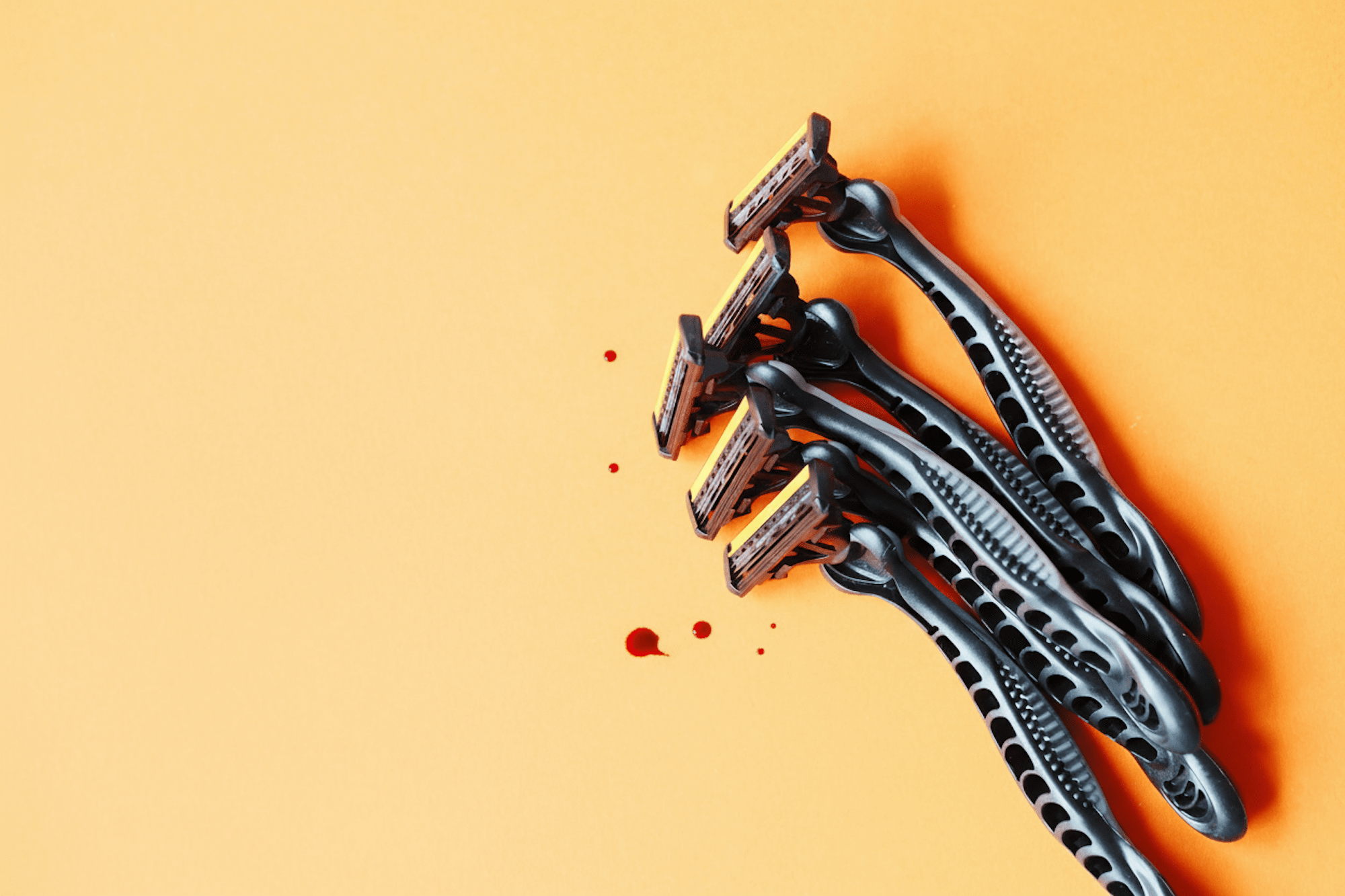








Let's be honest: that feeling of panic when you see blood "down there," we've all experienced it at least once. You look at yourself, you don't really understand how it happened, and above all, you wonder how you're going to explain it. that (and to whom) if it ever gets infected or worsens.
According to our discussions with the Billy community, approximately 7 out of 10 people have already cut their genitals. And the thing is, not all areas are equally prone to cuts. Some are downright dangerous.
Today, we're taking a look at the 5 most dangerous areas when it comes to intimate hygiene. Why they're risky, how they can trap us, and most importantly, how to approach them without ending up covered in bandages (or in the emergency room in extreme cases).
A short guided tour of the combat zones...
Cutting one's pubic hair: the most frequent accident
The pubic area is often where we start. It's the most "accessible" area, the one we can easily see in the mirror. But here's the paradox: it's also where we most often cut ourselves.
If you've ever cut yourself on your pubic area, you're far from alone. It's almost a rite of passage (unfortunately) that we all experience sooner or later in life.
Why it's risky
The pubic area seems simple enough, but it's actually tricky. First, there's the natural contour: the mons pubis in some men, the pubic bone just below it in everyone. As a result, the skin is never truly flat.
Next, pubic hair is often thick and coarse. It resists, it pulls, and as a result, we tend to press hard with the razor. Bad idea: the skin of the pubic area moves, it's difficult to keep taut, and as soon as you apply a little too much force, a cut is guaranteed.
The worst part is that it's a visible area. We want a "perfect" result, so we persist, going over the same spot 3, 4, 5 times. And then, boom: maximum irritation and cuts.
By 2026, we should have understood that insisting on using a regular razor on this area is not a good idea.
The classic mistakes that cause bleeding
Let's talk about the classics. Shaving against the grain on the first pass because you want it "nice and smooth." Going over the same spot five times because "there are still some hairs left." Using an old razor that snags and pulls. Dry shaving "because it's faster."
A classic scenario: the guy or girl shaving standing up in the shower, without really seeing what they're doing, on autopilot. The result: a nasty nick that you only discover when you get out, when the water stops running and the blood starts flowing.
The Billy solution
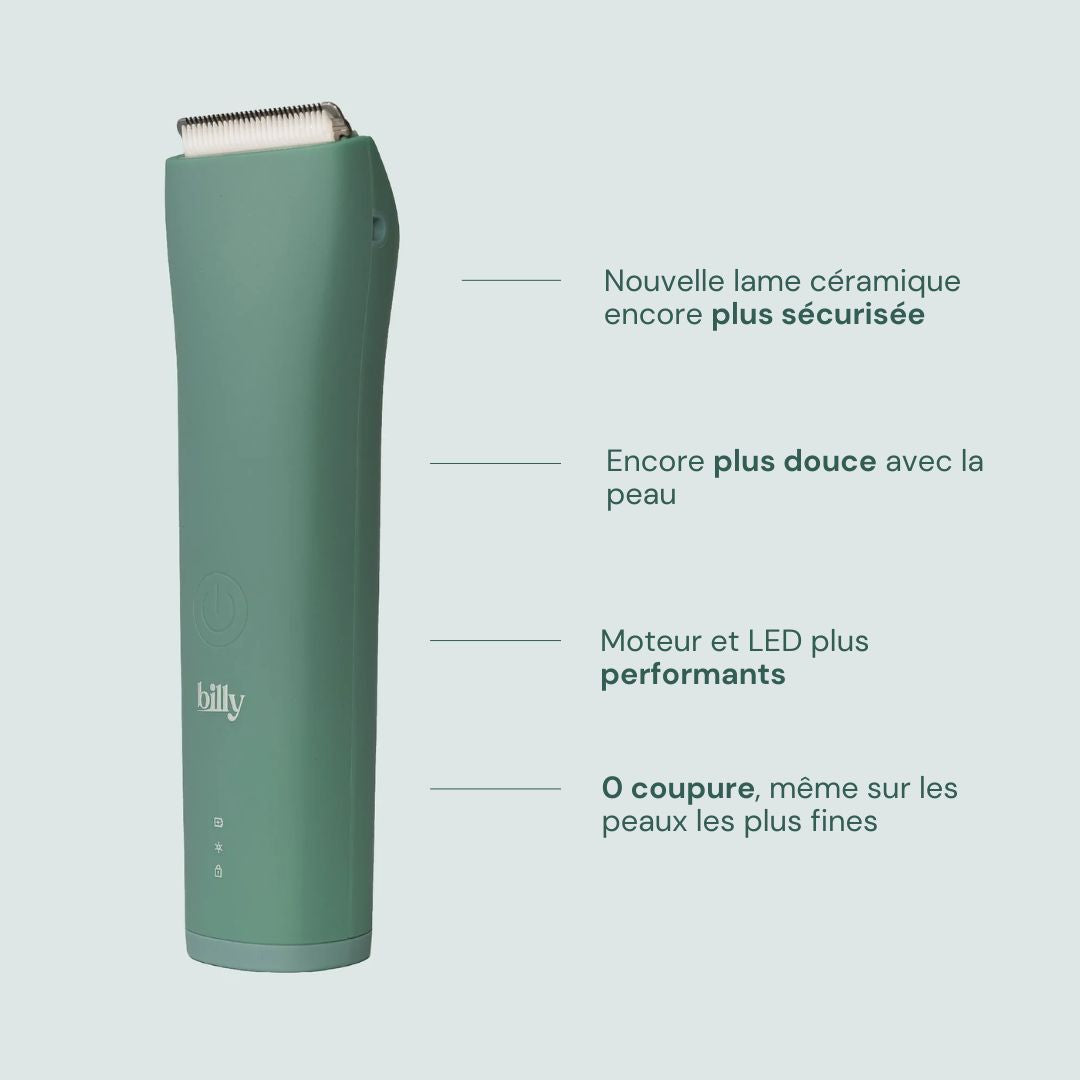
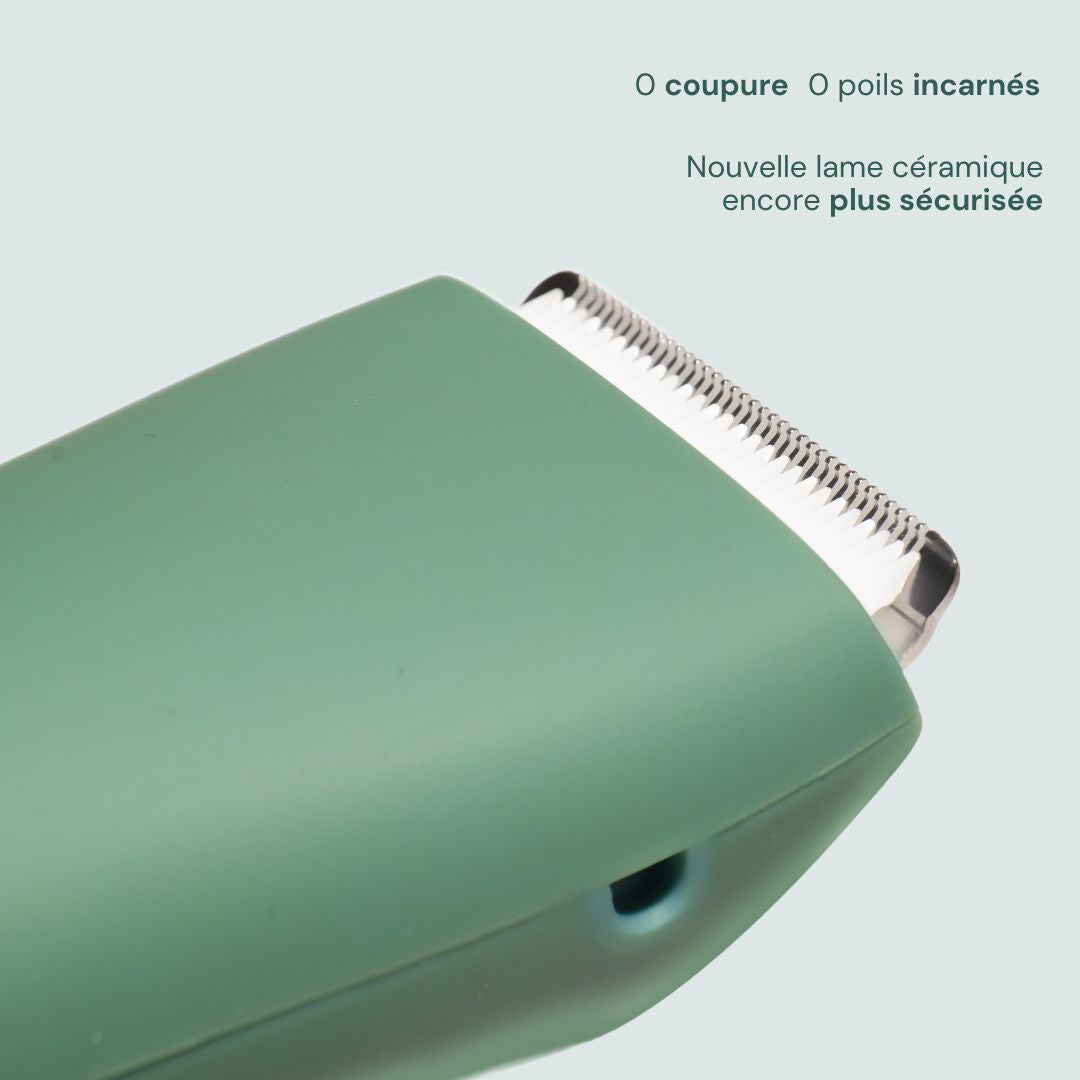
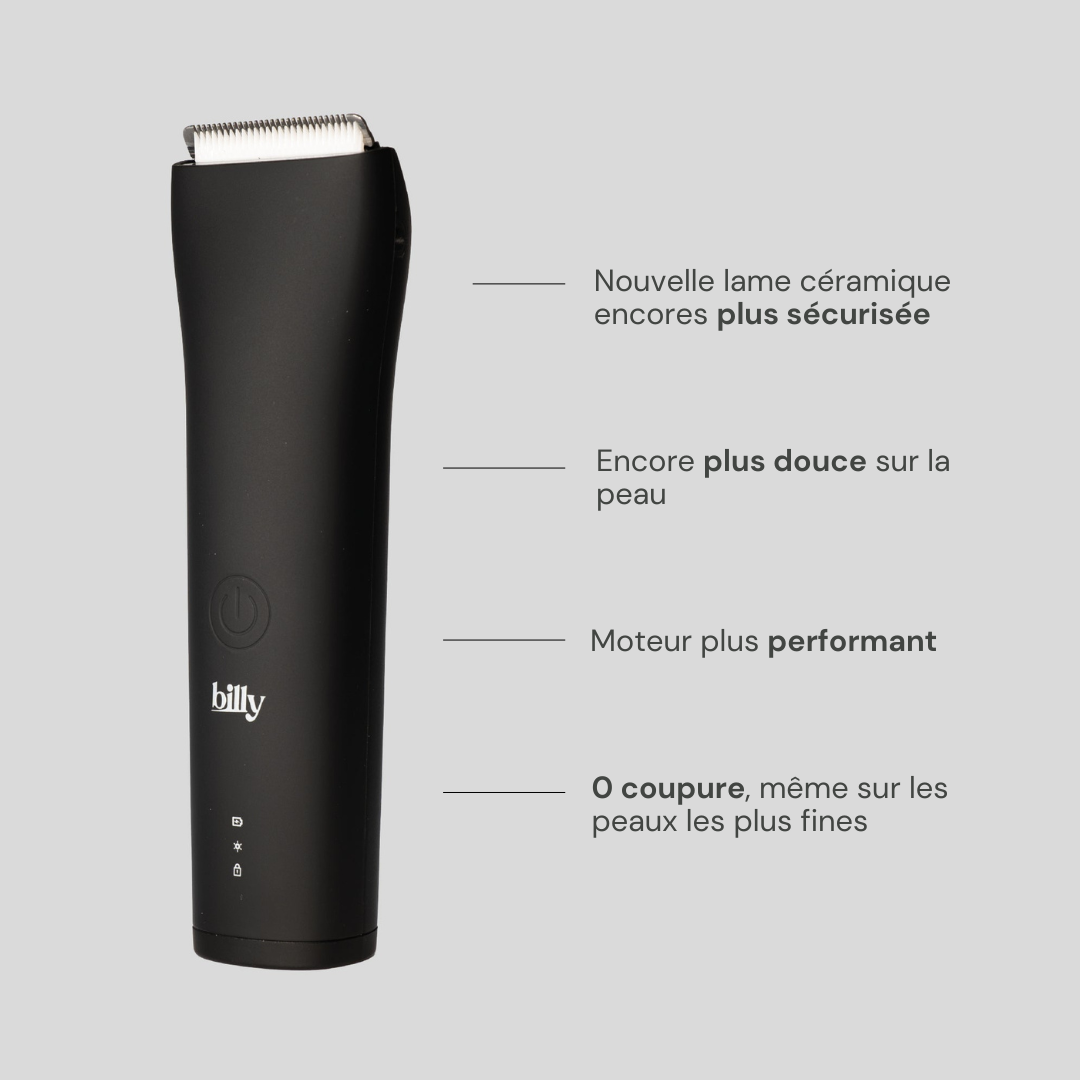
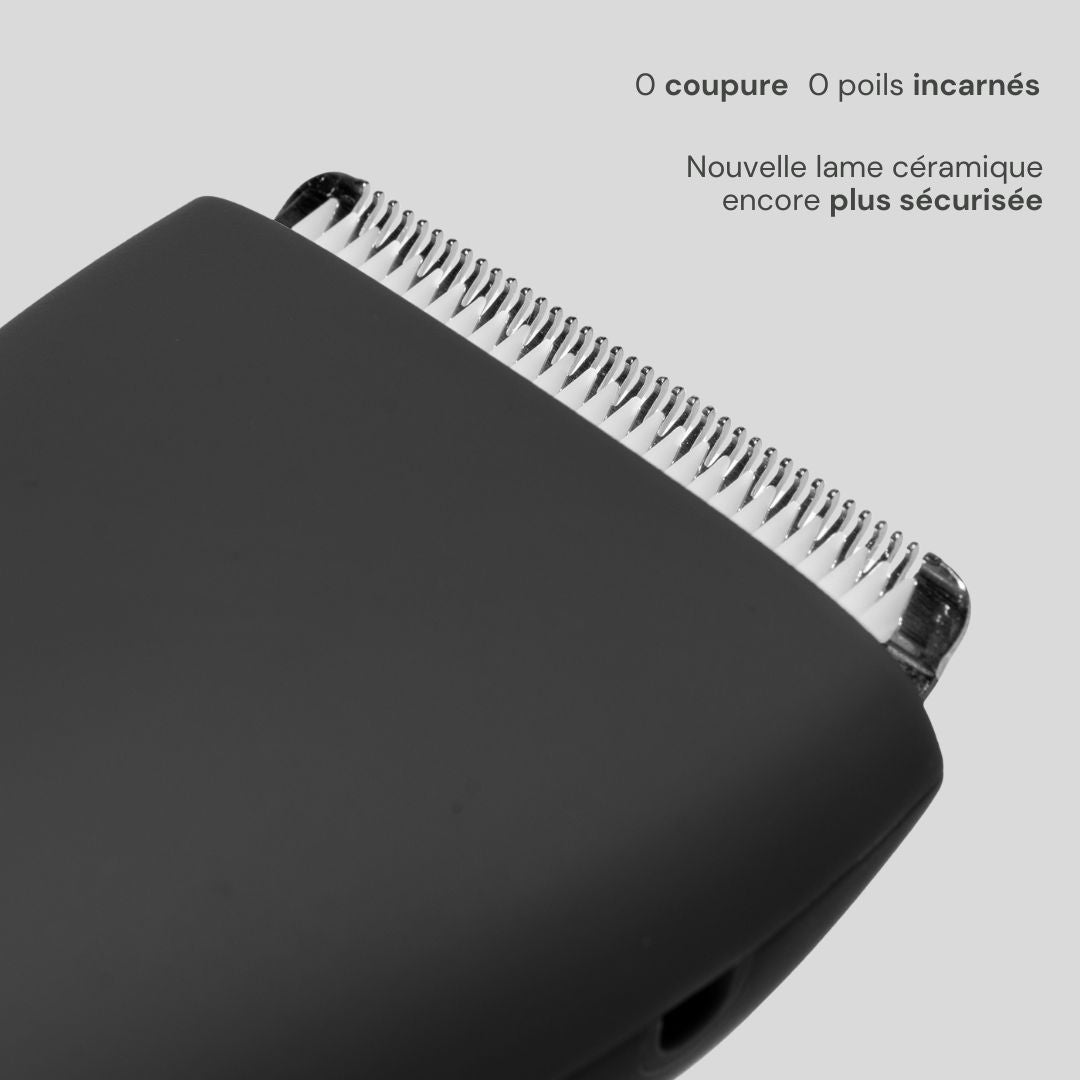
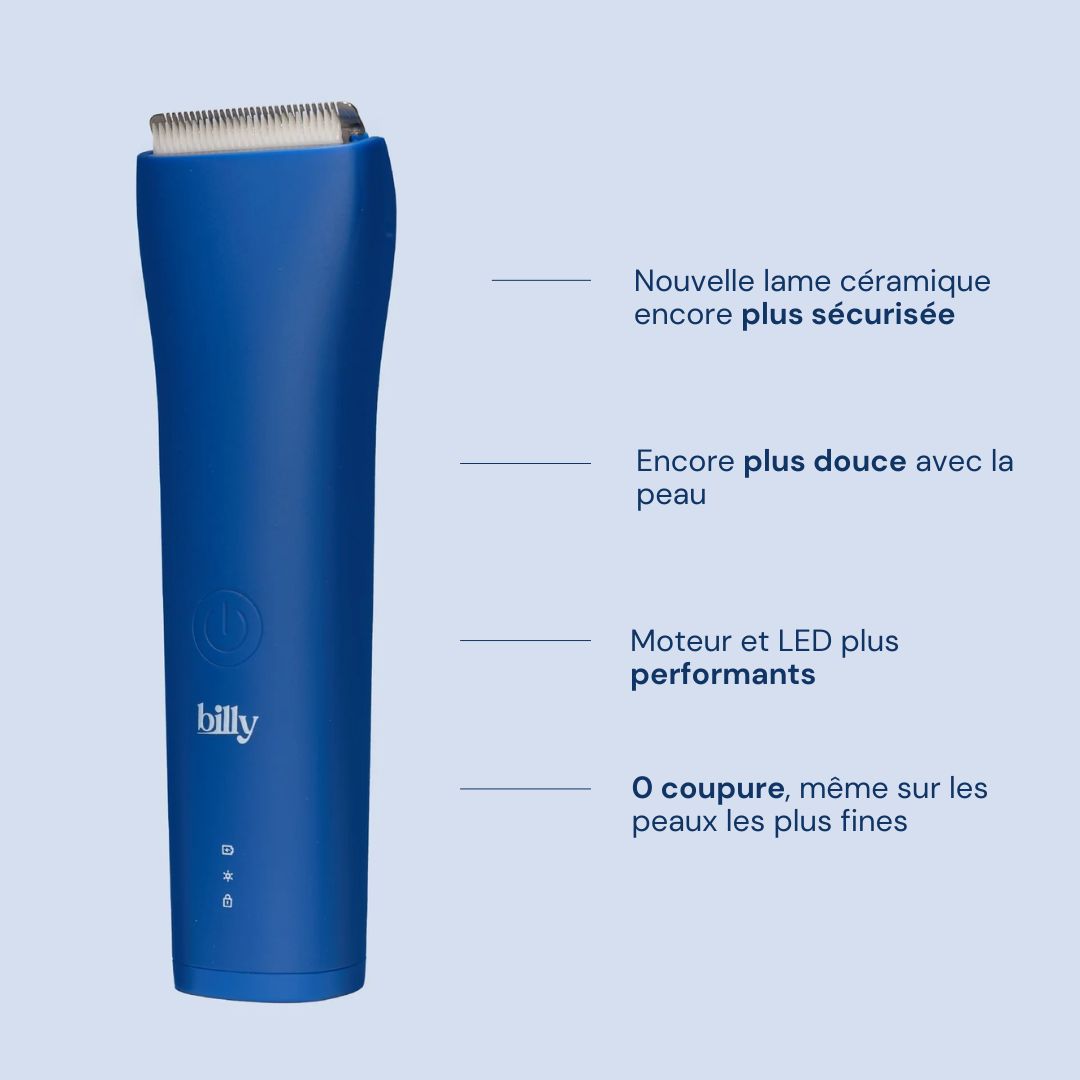
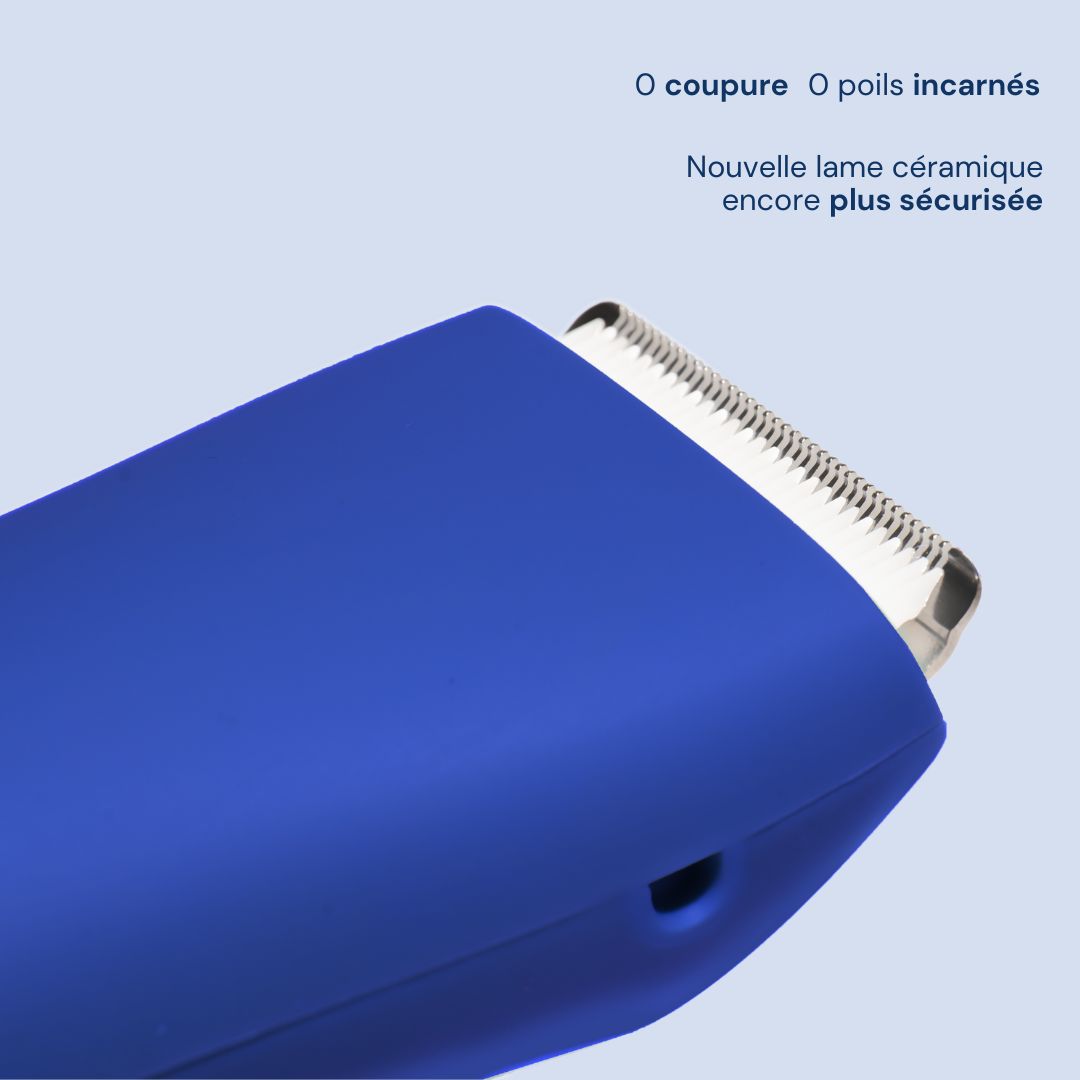
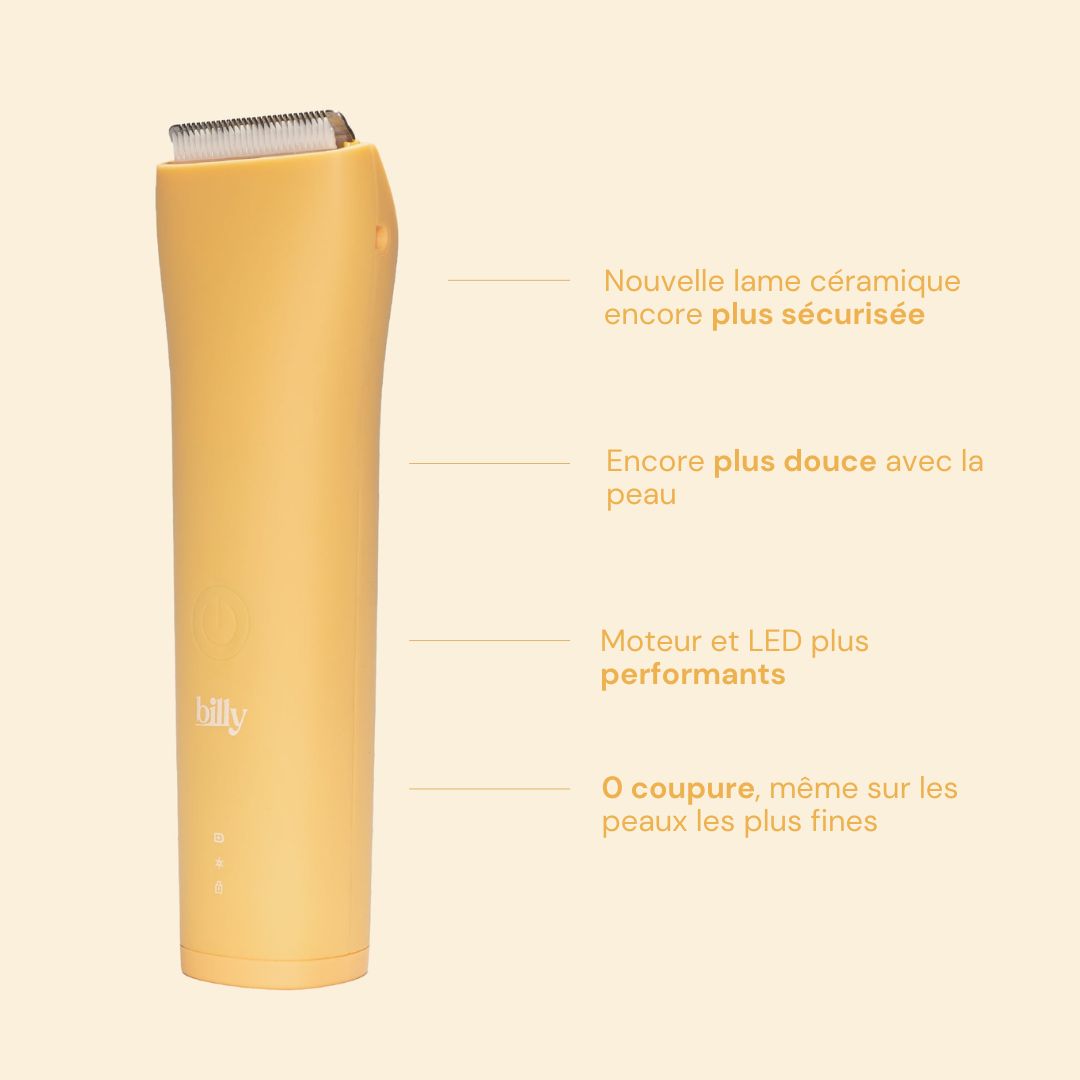
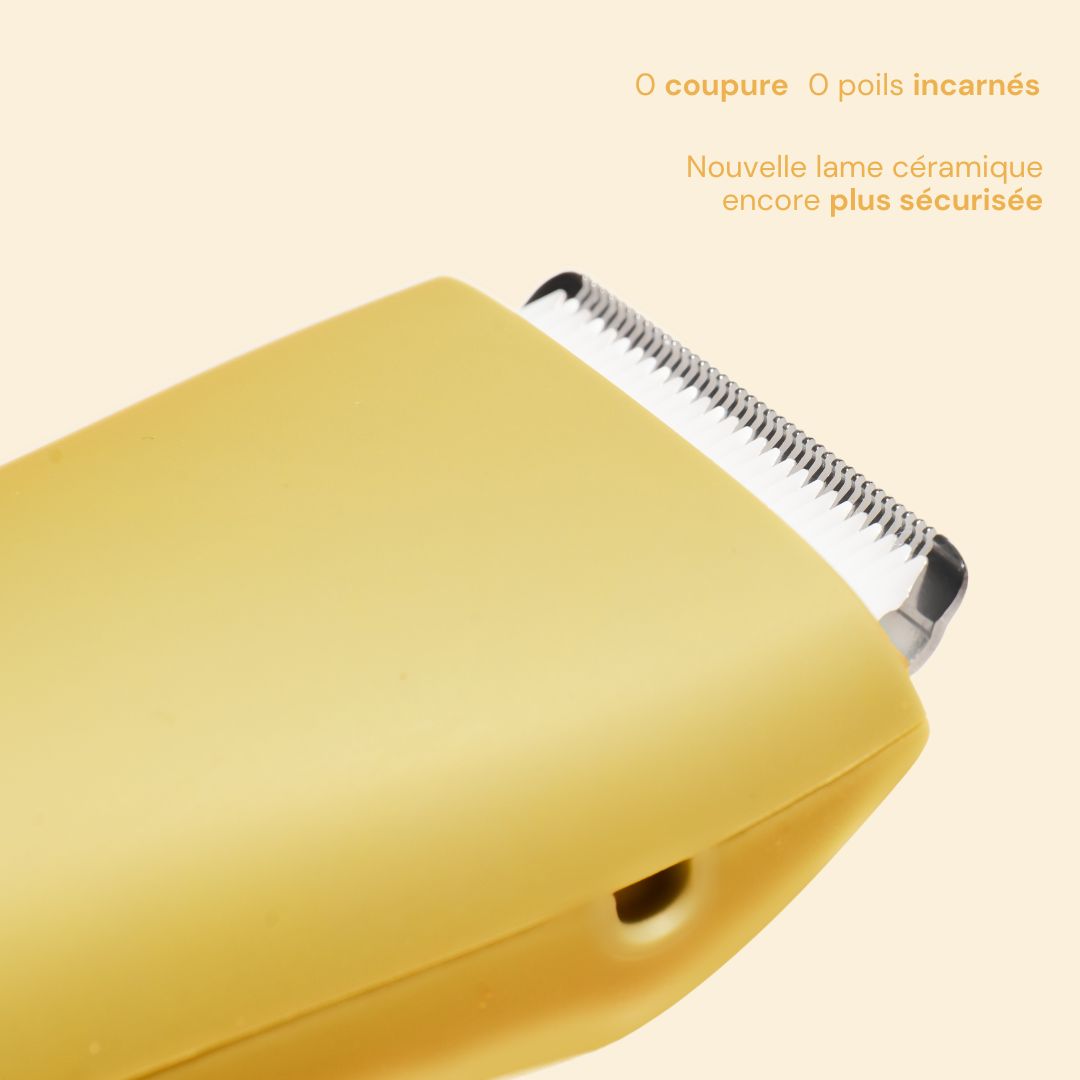
With an intimate trimmer , the game changes completely. First of all, there's no direct contact between the blade and your skin. The ceramic blade remains protected, cutting the hairs without snagging your skin.
Next, you have several cutting lengths to choose from. And that's crucial: you don't have to shave everything to 0mm to get a stylish result. You can start at 6mm, see how it looks, and go down to 3mm if you want. No need to risk everything to look good.
Using it in the shower is fine if the trimmer is waterproof (spoiler alert: Billy is). But even in the shower, you can see what you're doing thanks to the built-in LED. No more shaving blindly.
For pubic hair, our advice is to start with a 9mm trim to see how it looks, experiment, and adjust. You don't always need to be at 0mm to be stylish. Comfort before perfection. Starting at 9mm gives you the option to shorten or shave, create shapes, etc., depending on the style you want.
If you want to delve deeper into the subject, we have a complete guide to intimate shaving with all the myths and the real techniques that work.
The testicles: the area most at risk of being cut
Let's face it: testicles are THE area that causes the most anxiety. Nobody is truly comfortable the first time they have to shave them. And in 2026, it remains the number one area in terms of shaving anxiety.
The thing is, a lot of people want to or need to do it. For comfort, for hygiene, for aesthetics, to feel good before an intimate moment. But there's a world of difference between wanting to and knowing how to do it without ending up in the emergency room.
Why this is THE danger zone
The anatomy of the testicles is simply not designed to be shaved with a regular razor. The skin is extremely thin, stretchy, and wrinkled. You can't stretch it properly like you would on a cheek or a leg.
The scrotum is constantly moving. There's the cremaster reflex, which causes the testicles to rise and fall depending on temperature or stress. The surface is constantly changing depending on your position, the ambient temperature, and your level of relaxation.
And then there are the blind spots. You can't see all the angles at once, even with a mirror. It's impossible to get proper lighting with a standard bathroom light. The result: you end up shaving areas you can't really see, hoping it turns out alright.
Add to that the natural stress (because frankly, who is zen with a blade near their testicles?), and you have the perfect recipe for trembling and cutting yourself.
A quick snapshot of the classic situation: the guy trying to stretch the skin with one hand, holding the razor with the other, in a position worthy of a contortionist, praying it goes well. Spoiler alert: it rarely goes well. Cut + panic + ruined towel.
Testicular cuts: why they're hell
A cut to the testicles isn't like a cut anywhere else. For one thing, it bleeds a lot because the area is highly vascularized. You think to yourself that you're going to bleed out while the shower water dilutes everything and it looks like a crime scene.
Then, it really hurts. Ultra-sensitive area + cut = immediate and persistent pain. And it heals slowly because your clothes are constantly rubbing against the area. Underwear, boxers, pants: everything becomes a source of discomfort.
There's also the fear of infection. An open wound in a warm, moist area, with naturally occurring bacteria... It's not ideal. And it's impossible to easily "show" the injury if you ever need to see a doctor. "So, doctor, I cut my balls while shaving" is still a difficult sentence to say, and for most people, showing the cut will probably be even more embarrassing.
The psychological impact is real too: you're afraid to do it again. Some people completely stop exercising after a bad experience.
The real solution in 2026
By 2026, we'll finally have tools designed specifically for this area. An intimate trimmer with a cut-resistant ceramic blade isn't just marketing hype; it's a real technological difference.
The design follows the contours of the body without snagging. The blade remains protected; it cannot come into direct contact with the skin, even on the most delicate areas. You run the trimmer over your hair, it cuts it, period.
The integrated LED light is a game changer for your testicles. You can finally see what you're doing, even in the shadows. No more shaving blindly while crossing your fingers.
The technique: gently stretch the skin (without forcing it), run the trimmer smoothly over the area, and let the tool do the work. And most importantly: there's no need to trim the testicles to 0mm. 6mm or 3mm is more than enough for comfort and aesthetics. The ceramic blade does the job smoothly.
The fact that it's waterproof means you can do it in the shower, in a comfortable, relaxed position. No stress, no awkward contortions.
Pro tip for testicles: take your time, use an LED light, and prioritize comfort over perfection. A well-done 3mm is 1000 times better than a 0mm with cuts and three days of pain.
We have a complete guide to safely shaving your testicles if you want all the technical details and the positions that work. And if you're still wondering, yes, you can safely use Billy on your scrotum .
The intergluteal cleft: a near-impossible mission without injury
The gluteal cleft (or intergluteal cleft, for those in the know) is the area no one talks about. But in reality, many people want to take care of it. For comfort (especially in summer or when playing sports), for hygiene, and also for aesthetic reasons.
Let's not kid ourselves: it's complicated. And with a regular razor, it's downright dangerous.
Why it's a hassle (and risky)
Accessibility is nonexistent. You can't see what you're doing, even with contortions worthy of Cirque du Soleil. It's a hollowed-out surface, with thin skin and hair growing in every direction.
The area is naturally moist, so a razor glides easily. You have a complete blind spot without a mirror (and even with one, good luck). The risk of cutting yourself is high, and as a bonus, you can also end up with ingrown hairs in the same spot. Jackpot.
A realistic scenario to illustrate: you're standing there with a mirror on the floor, one leg on the edge of the bathtub, the other precariously balanced, a razor in one hand and your phone with the flashlight in the other. If someone walks into the bathroom at that moment, you'll look like a character in a horror movie having an existential crisis.
The result of this acrobatics: often it's a failure, often you cut yourself, and sometimes both at the same time.
The consequences of a power outage at SIF
A tear in the gluteal cleft is a daily nightmare. You're in pain every time you sit down. Every. Single. Time. At the office, in the car, on the sofa: everything becomes an ordeal.
Healing is extremely slow because the area is in constant friction. It's impossible to apply a compress properly (it doesn't stay in place, it slips). If you cycle, run, or even just walk briskly, you're going to be in pain.
And the worst part: you can't talk to anyone about it. It's already taboo to talk about intimate hygiene, so talking about a cut between your buttocks... You end up suffering in silence, wondering when it will finally heal.
The technical solution
An intimate trimmer with an ergonomic handle and a head that adapts to contours makes all the difference for this area. You no longer need to see: you feel the tool following the shape of your body.
The integrated LED remains essential for checking that you're cutting everywhere, even if you're working somewhat blind. And the fact that the blade is protected allows you to cut into difficult areas without risking a cut.
The technique: stand up, leaning slightly forward (no gymnastics required), and run the lawnmower slowly over the area. The tool does the work. You can use a mirror on the wall (not on the floor, please) to check the result if you want.
And most importantly: there's no need to look for 0mm in the intergluteal cleft. A 3mm or 6mm is perfect for comfort and hygiene. Wanting 0mm there, frankly, is just asking for trouble. Trust me.
If you're interested in this topic, we have detailed information on how to shave between your buttocks without putting yourself in danger.
The perineum: the place we forget (and that bleeds)
The perineum is the area between the testicles and the anus (or between the vulva and the anus, depending on the anatomy). It's an area often neglected in the routine of intimate hygiene.
However, hair grows there too. And when we remember, it's often too late: we've already cut ourselves.
Why do we cut ourselves off from it?
The perineum is an extremely sensitive area with very thin skin. It's difficult to access and impossible to see naturally without a mirror and contortions. The hair there is often finer, but the skin is even more fragile than on the testicles.
We think about it last, when we do a "complete session". As a result, we are already tired from the shaving session, we want to finish quickly, and that's when we make a sudden movement.
With a regular razor, the angle is awkward, the pressure is poorly controlled. There are little creases in the skin, raised areas you can't see. And that's how you cut yourself.
Classic scenario: you finish shaving peacefully, rinse with water, and then you feel this weird little burning sensation. You tell yourself "it's nothing". You look at yourself (mirror, contortion at expert level), and boom: blood.
Congratulations, you've just discovered you have a pelvic floor. And now you're going to think about it for a week with every movement.
Why this is problematic
The perineum is an area of intense friction. Underwear, boxers, trousers: everything rubs together. If you cycle, play sports, or even just walk a lot, you'll feel it.
Sweating in this area slows healing. The risk of infection is higher than elsewhere. The pain persists for several days, sometimes a week.
Walking becomes an extreme sport. Sitting, a challenge. And it's impossible to explain why you walk strangely at the office.
The smart approach
A lightweight and easy-to-handle intimate trimmer is the bare minimum for this area. Don't aim for an absolute 0mm shave on the perineum. It's unnecessary and risky.
The technique: sitting on the edge of the bathtub or shower makes access easier and more natural. You run the clippers over the area once, slowly, without applying pressure. Don't overdo it.
Use the LED to precisely identify the area and see where you're going. If you're unsure about a section, leave 6mm; that's already perfect for comfort and hygiene.
The perineum isn't a competition. Well-groomed is better than closely shaved. Comfort is better than extreme aesthetics. We have more information on how to shave the perineum with Billy if you want to delve deeper into the subject.
The groin and the folds: the sneaky cuts you don't see coming
The groin is the junction between the thigh and the pubic bone. The creases are where the leg bends when you walk. These are "transition" areas that we tend to neglect.
However, outages are frequent there. And they are vicious.
Why is it sneaky?
The skin in the groin area is mobile: it moves with your movements. There are natural folds that hide areas of particularly thin skin. We don't really think about it, so we're not very careful. We shave our pubic area, we shave our thighs, and in between we do pretty much whatever we want.
The hairs don't stop abruptly at a specific point. There's a natural gradient that's difficult to manage with a razor. The blade catches in the creases, especially if you're using a regular razor.
Skin elasticity plays tricks: what seemed flat when you were in one position becomes raised as soon as you move. And perspiration in that area makes the razor slip unpredictably. Cuts guaranteed.
Classic scenario: you're shaving standing up, leg straight. It looks perfect. You bend your leg afterwards: surprise, you missed some spots. You quickly go over the same area again = you cut yourself in the crease.
The next day, every step reminds you of it. Climbing stairs becomes an adventure. Putting on tight jeans, a nightmare.
The specific consequences
The constant friction of underwear or boxers on the cut prevents normal healing. The cut "reopens" with every movement throughout the day: walking, sitting, standing up, crossing your legs.
It becomes red and irritated. It sometimes looks like an irritation or even a fungal infection, which adds to the anxiety of "what is this thing?".
If you're in swimsuit season (beach, pool), the area is visible. You end up with a very noticeable redness or scab right at the bikini line. And the added bonus of social anxiety.
It's difficult to apply a compress: it doesn't stay in place with movement. Healing easily takes a week, sometimes longer if you continue to move normally (which is impossible to avoid).
The technique that works
A trimmer with a head that adapts to the body's curves is essential for the groin area. The technique: keep your leg slightly bent, in a natural position. No need to fully extend it like an athlete.
You're not looking for perfection in the folds. Leaving 3mm in areas of high friction is smart. It prevents irritation and cuts, and it remains invisible under clothing.
Go over the hair in several directions because it grows a bit in a star shape in this area. Don't panic if you see that it stays a little longer in a fold: that's normal, and it's better than forcing it and ending up with a cut.
After shaving, dry the area thoroughly. Residual moisture plus friction will inevitably lead to irritation.
For the groin area, the rule is simple: if it pulls or catches, stop immediately. Your tool isn't suitable for that area. Period.
If you want a complete comparison of the different options, we have an ultimate guide to men's intimate trimmers that covers all scenarios.
By 2026, we can avoid all of this.
Let's recap the 5 risk zones:
Pubic hair: frequent accidents due to overzealousness. We want perfection, we insist, we cut ourselves.
Testicles: the scariest and objectively most dangerous area with a regular razor.
Intergluteal cleft: mission impossible with a razor, total blind spot, ridiculous contortions.
Perineum: the area we forget and which takes its revenge painfully.
Groin and folds: the sneaky cuts that ruin daily life for a week.
The common pattern
If you look closely, all these areas share the same characteristics: thin skin + complex terrain + blind spots . It's simple math: an unsuitable tool in these conditions = guaranteed accident.
The classic razor was designed for the face. A relatively flat, visible, accessible surface. Not for areas with changing contours, folds, impossible angles, and ultra-thin skin.
By 2026, we finally have tools specifically designed for intimate areas. Trimmers with protected blades, designs that follow the curves of the body, and integrated lighting to see what you're doing.
The real question is: why continue to take risks with unsuitable tools?
Billy's message
Everyone does what they want: shaved, trimmed, natural. We're absolutely not here to tell you how you should manage your body hair. It's your body, your choice, your style.
But if you choose to groom your private parts, you might as well do it right. Without risk, without stress, without ending up with cuts that ruin your week.
An intimate trimmer isn't just a marketing gimmick. It makes a real difference in terms of safety. Designed for sensitive areas, with a protected ceramic blade that can't cut you, and an integrated LED so you can finally see what you're doing.
Because cutting off your balls (literally) is no longer inevitable in 2026.
Want to delve deeper into the subject? We have a complete guide to safe testicle shaving and plenty of other resources on the blog.
And you, which area gives you the most trouble? Tell us in the comments (or not, we understand it's not easy to share).
Questions we ask ourselves about intimate cuts
Which area is the most dangerous to raze?
The testicles objectively win the title of the most dangerous area. The skin there is thinner than elsewhere, the surface is constantly changing, and the rich blood supply means that there is significant bleeding in the event of an accident.
But the intergluteal cleft comes in second place because of its almost nonexistent accessibility. It's not so much that it's more anatomically dangerous, it's that you can't see what you're doing.
Each area has its specific pitfalls. The "danger" also depends heavily on the tool used. With a regular razor, all these areas are risky. With a suitable intimate trimmer, they all become much safer.
What should I do if I cut myself in my private parts?
First thing: don't panic. There's always a lot of bleeding in the genital area because it's highly vascularized. It's alarming, but often not as serious as it seems.
Rinse with lukewarm (not hot) water. Apply a clean compress with gentle pressure for 2-3 minutes. No need to press hard, just apply steady pressure.
Use a mild antiseptic if you have one. Avoid pure alcohol: it will burn like hell and it's unnecessary. An antiseptic like Biseptine or equivalent will do the job.
If it continues to bleed after 10 minutes of pressure: see a doctor. Seriously. It's rare, but it can happen, and now's not the time to try to be a hero.
Watch for signs of infection in the following days: spreading redness, unusual heat, pain that increases instead of decreasing, unusual discharge. If you observe these symptoms, a consultation is mandatory.
And most importantly: no shaving for at least a week on the injured area. Let it heal completely.
How to avoid cuts with a lawnmower?
First, choose an intimate trimmer , not a beard trimmer or a generic "body" trimmer. The technical difference is enormous in terms of skin protection.
A cut-resistant ceramic blade isn't just marketing hype. The ceramic stays sharp longer, and the protective design prevents direct skin contact.
Always start with a high cutting height (6mm for example). Test it, see the result, and then gradually reduce it if you want. Going straight to 0mm is taking unnecessary risks.
Move slowly, without pressing down. The trimmer does the work on its own; you're just there to guide it. If you have to force it or press down, something's wrong (worn blade, unsuitable tool, hairs too long).
Use the built-in LED to see exactly what you're doing. It's not a minor detail, it's a game changer in hard-to-reach areas.
The skin needs to be clean. Either dry if you're doing this outside the shower, or in the shower if your trimmer is waterproof. Both work, it's just a matter of preference.
The Billy was designed exactly for this: safe use on all sensitive areas.
Can a personal groomer still cut?
A high-quality intimate trimmer: the risk is virtually zero. The design ensures the blade never directly touches your skin. It has a built-in protection system that maintains a safe distance between the blade and the skin.
It's very different from a regular lawnmower or beard trimmer. The latter are designed for flat, visible areas, not for sensitive areas with contours.
Beware of low-end "body trimmers" found in supermarkets. They are often less well-protected, with less sophisticated safety systems.
Billy was specifically designed for intimate areas: protected ceramic blade, contoured design, and no possibility of the blade coming into direct contact with the skin. It can be used on even the most sensitive areas without risk.
How long does it take for an intimate cut to heal?
It depends on the depth and especially the area.
A superficial micro-cut: usually 3 to 5 days. It's unpleasant but it heals fairly quickly.
An average cut (that has bled well): 7 to 10 days. It remains sensitive for about a week.
Depending on the area, it can take longer. The testicles and perineum heal more slowly due to constant friction with clothing. The gluteal cleft also heals more slowly because the area remains moist and in constant motion.
Factors that influence healing: hygiene (keep the area clean and dry), clothing (avoid tight clothing during healing), physical activity (intense exercise slows down healing).
If there's no visible improvement after a week, or if it gets worse, consult a doctor. An infection could develop, and that would be more serious.
The good news: with the right tools, you can completely avoid this problem. A personal trimmer almost entirely eliminates the risk of cuts, so there's no scarring to worry about.



Share on your networks: